
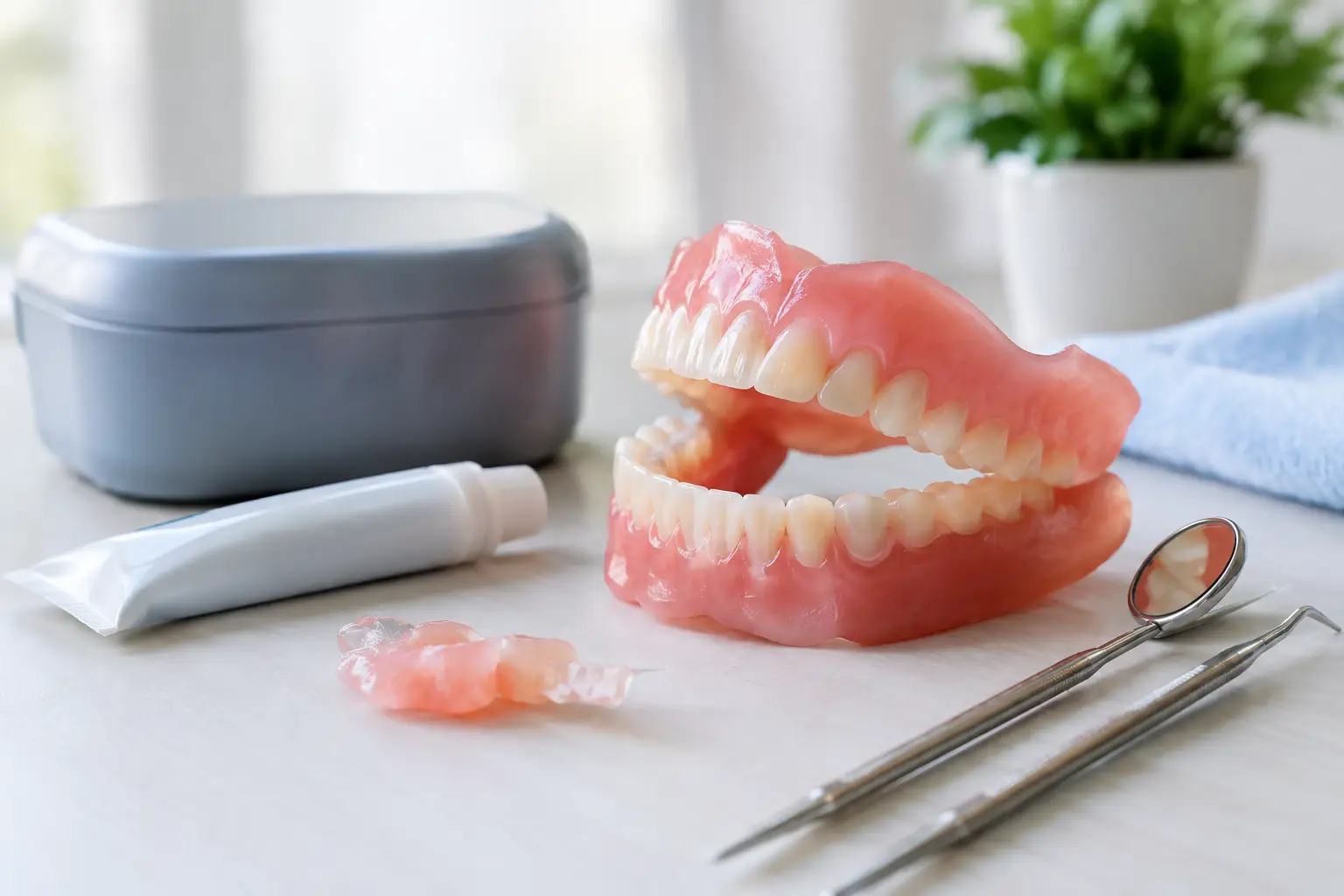
Denture Repair Cost and What You May Pay
Updated: Oct 2
A broken denture can turn an ordinary meal, conversation, or workday into a problem that needs attention quickly. Denture repair cost depends on what failed, how much of the appliance is damaged, and whether the denture still fits correctly after the repair. A small crack may be a straightforward fix. A denture broken into several pieces, a missing tooth, or a damaged metal framework can require more involved laboratory work.
The best way to get a reliable price is to have the denture assessed before approving work. Photos and a clear description of the damage can help begin that process, but the condition of the appliance must guide the final recommendation.
Typical Denture Repair Cost Ranges
Repair pricing varies by location, materials, and the design of the denture. The ranges below are general estimates for common professional repairs in the United States, not a quote for a specific case.
A simple acrylic crack repair may cost roughly $150 to $200. Rejoining a denture that has broken cleanly in two can often fall between $200 and $250, depending on whether reinforcement, repositioning, or additional adjustment is needed. Replacing one denture tooth commonly costs about $250 to $300. A more extensive repair involving multiple teeth, damaged clasps, or a partial denture framework can cost several hundred dollars or more.
Same-day or urgent service, when available, may add to the total. So can shipping, adjustment work, relining needs, or repairs that reveal a larger fit issue. A low starting price can be useful information, but it does not tell the full story until the damage has been evaluated.
What Affects Denture Repair Cost?
The break itself is only one part of the price. A repair technician must determine whether the denture can be restored safely and whether the repaired appliance will remain comfortable and functional.
Type and location of damage
A hairline crack in a stable acrylic base is different from a break across the middle of a full upper denture. A clean break may allow the pieces to be aligned accurately. Jagged, missing, warped, or repeatedly repaired pieces take more time to restore. If a denture has broken in the same area more than once, the repair may need reinforcement or the appliance may need to be replaced.
Damage near a tooth, clasp, or attachment can also affect the work required. These areas help the denture stay stable during chewing and speaking. Restoring them involves more than simply bonding material back together.
Full dentures versus partial dentures
Full dentures are generally made from acrylic resin. Many common breaks can be repaired when the pieces are available and the denture still fits the mouth properly.
Partial dentures may include acrylic, metal clasps, flexible material, or a metal framework. Repairs to a partial can be more complex, especially if a clasp is bent or broken, a tooth has come loose, or the frame is damaged. Certain flexible denture materials require specific repair methods and may have more limited repair options.
Age and condition of the denture
Older dentures can become thinner, worn, stained, or weakened over time. If the acrylic has become brittle or the teeth are heavily worn down, a repair may extend the appliance's life but may not be the most economical long-term choice.
A denture that no longer fits can break because it is moving excessively during use. In that situation, fixing the crack alone may not address the reason it occurred. A reline, adjustment, or replacement may be recommended after the immediate repair.
Missing pieces and replacement parts
Bring or send every piece of the broken denture, including loose teeth or clasps. A technician may be able to reuse an original tooth if it is intact and suitable. If a piece is missing, replacement material and added fabrication time can increase the cost.
Turnaround needs
When a denture is essential for daily speech or eating, speed matters. Rush service can be practical, but it may cost more than standard turnaround. Ask whether the repair can be completed on your needed schedule and whether a rush fee applies before authorizing the work.
Repair or Replace: Which Costs Less in the Long Run?
Repair is usually the less expensive option when the denture is otherwise sound, fits well, and has a limited area of damage. It can restore function without the cost and time involved in making a new appliance.
Replacement may make more financial sense when the denture is severely worn, repeatedly breaking, poorly fitting, or missing several teeth. A repair can still be useful as a temporary solution, but repeated repairs add up. More significantly, a loose or unstable denture can cause sore spots, make chewing difficult, and put extra stress on the appliance.
There is no single age at which every denture should be replaced. The decision depends on fit, condition, oral changes, and the type of damage. A professional assessment should be direct about whether the repair is a durable solution or only a short-term measure.
Avoid Home Repair Kits and Household Glue
When a denture breaks, home repair kits can seem like the fastest answer. They can also create a more difficult and expensive professional repair. Household glues are not designed for use in the mouth and may contain materials that should not contact oral tissues. They can leave residue that prevents accurate bonding and may change the way the broken pieces fit together.
A home repair can also alter the denture's shape. Even a slight change can affect the bite, create pressure points, or make the appliance unstable. Do not wear a denture that has been repaired with household adhesive. Keep the pieces clean, dry, and together in a protective container until they can be assessed.
Information That Helps Get a Clear Repair Estimate
A detailed repair request reduces delays and makes it easier to determine the next step. Include your contact information, describe what happened, and explain whether the denture is a full or partial appliance. Mention whether it broke once or has been repaired before.
Clear photos can be useful. Take pictures of the front, back, and broken area in good lighting. If pieces have separated, photograph them next to each other without forcing them into position. For partial dentures, include close photos of clasps, metal components, and any teeth that are loose or missing.
Also state whether the denture still fits, whether it causes pain, and when you need it back. A repair provider can then assess whether photos are sufficient to begin the process or whether an in-person evaluation is necessary.
Does Insurance Cover Denture Repair?
Dental insurance plans vary widely. Some plans include limited denture repair benefits, while others cover repairs only after a waiting period or only when the repair is performed through an approved provider. Annual maximums, deductibles, and frequency limits can affect what you pay out of pocket.
If you have dental coverage, check your plan before scheduling the work. Ask whether denture repair is covered, what documentation is required, and whether there are restrictions on laboratory services. If you are coordinating care for a parent or relative, confirm that you have the policy and member information needed to ask these questions.
When a Broken Denture Needs Prompt Attention
Stop using the denture if it has sharp edges, loose pieces, or a crack that is getting worse. Continuing to wear it can irritate the mouth and turn a repairable break into more extensive damage. If the denture is still in one piece but feels suddenly loose, painful, or uneven, do not try to bend or reshape it yourself.
A repair quote should give you more than a number. It should help you understand what is damaged, whether the appliance can be restored reliably, and what information is needed to move forward. Send clear details and photos when possible, keep all broken pieces, and get the condition evaluated before choosing the lowest-cost option.
Broken denture? Bring it to our denture repair lab in Stoneham, MA (walk-ins welcome) or call (781) 526-8688. Many repairs are finished the same day.
Related reading: Denture Base Crack Repair for Broken Dentures
Where we help: patients walk in or mail their dentures to us from Boston, Everett, Lowell, Framingham, Worcester, Plymouth, the North Shore, Middlesex & MetroWest, South of Boston, Cape Cod, southern New Hampshire and Providence, RI.
Comments