
How to Manage Denture Fracture Without Making It Worse
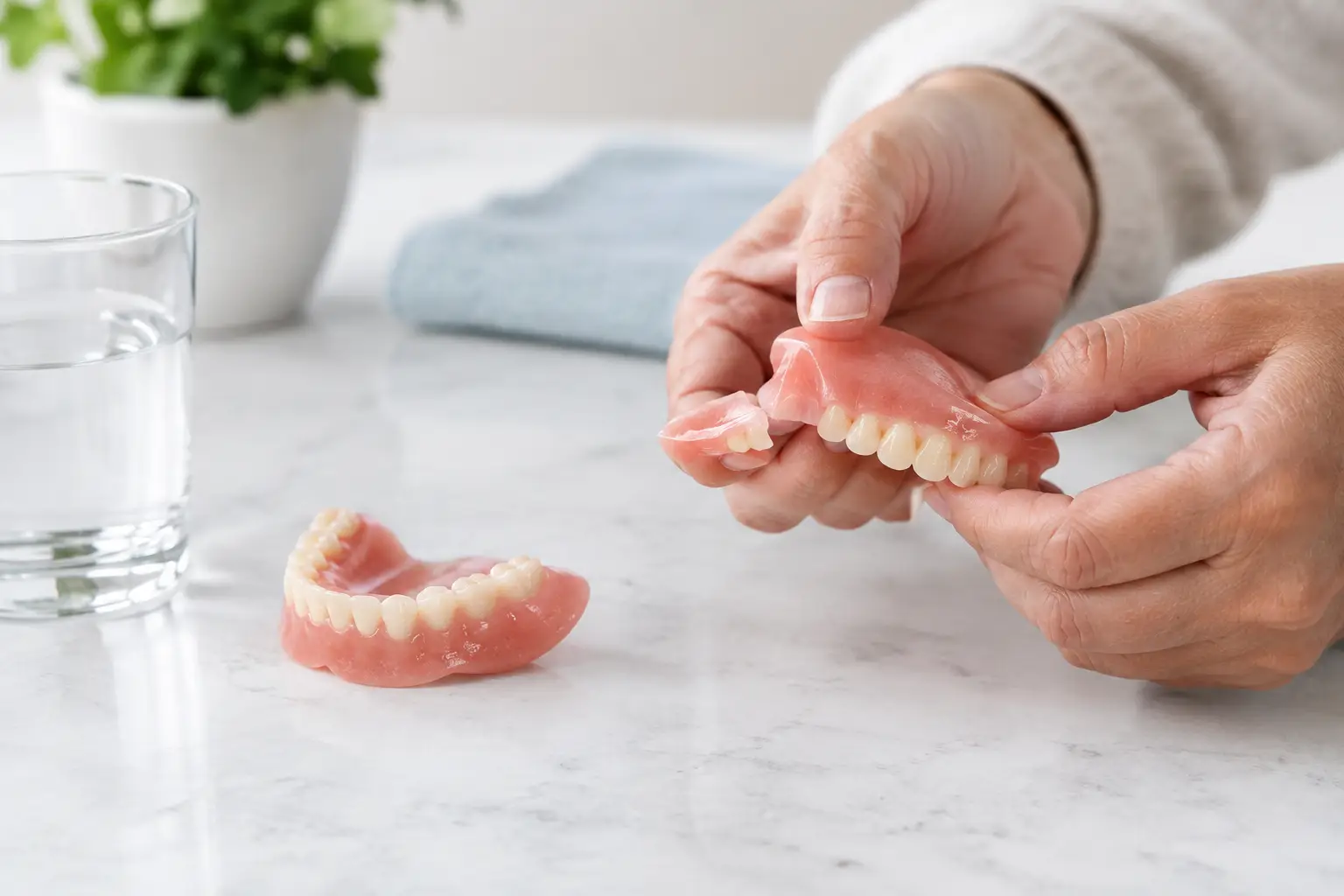
A cracked or broken denture can interrupt meals, speech, and routine without warning. To manage denture fracture safely, the first priority is simple: stop using the appliance, keep every piece you can find, and arrange a professional assessment before attempting any repair at home.
A fracture does not always mean the denture is beyond repair. A clean break, a crack across the base, a loose tooth, or a damaged clasp may each call for a different repair approach. Continuing to wear a damaged denture or using household glue can turn a manageable problem into a more complicated one.
What to Do When a Denture Breaks
Remove the denture carefully as soon as you notice a crack, sharp edge, loose tooth, or change in fit. Do not force it out if it is catching on remaining teeth, attachments, or sore tissue. If removal is difficult or causes significant pain, contact a dental professional for direction.
Place the denture and any loose pieces in a clean, secure container. Do not wrap small fragments in a tissue. They are easy to throw away by accident. If the denture has a metal framework or clasp, check the container carefully for any small parts that may have separated.
Rinse the appliance gently with cool or lukewarm water to remove food debris. Avoid hot water. Heat can warp denture material, alter the fit, and make later repair more difficult. Do not scrub along a crack or try to push broken sections back together.
If you have a partial denture, do not try to bend a clasp back into place. Metal components can weaken or fracture further when bent without the right tools. A partial that no longer sits properly can also place pressure on natural teeth or gum tissue.
Do Not Use Household Glue
Home repair products are not made for dentures or oral use. Super glue, epoxy, craft adhesive, tape, and similar products can leave residue, create uneven surfaces, and make the appliance unsafe or uncomfortable to wear. They can also interfere with a professional repair.
Even a break that appears to line up perfectly can be misleading. A denture must return to the correct position without creating a ridge, gap, or bite change. A slight misalignment may cause rubbing, sore spots, difficulty chewing, or stress in another area of the appliance.
Over-the-counter temporary repair kits may seem convenient, but they are not the same as a laboratory repair. They may be unsuitable when the break involves a tooth, metal component, multiple cracks, a poor fit, or repeated damage. If you use any temporary material, disclose it during the repair request so the appliance can be evaluated correctly.
Common Types of Denture Fracture
Denture damage can look minor while still affecting function. Knowing what happened helps a repair provider evaluate the next step.
A Crack in the Denture Base
A hairline crack may appear across the pink acrylic base, often near the center of a full upper denture. It may feel flexible, pinch during chewing, or open slightly when the denture is handled. Stop wearing it when possible. Cracks can spread quickly under normal chewing pressure.
A Clean Break Into Two Pieces
A denture that has separated into two or more pieces may be repairable, especially when all pieces are available and the fracture surfaces are relatively clean. Keep the pieces together in the same container, but do not tape or glue them into position.
A Loose or Missing Denture Tooth
A tooth can loosen, crack, wear down, or come out after impact or prolonged use. Save the tooth if it is intact, even if you are unsure whether it can be reused. Do not continue wearing the denture if the missing tooth leaves a sharp area or changes the way the denture closes.
A Damaged Clasp or Metal Framework
Partial dentures may fracture at an acrylic section, around a tooth, or at a metal clasp. A clasp that feels loose, sharp, bent, or broken should not be adjusted at home. Because partial dentures interact with natural teeth, a poor fit can cause discomfort and unnecessary pressure.
When a Fracture Needs Faster Attention
Some denture problems should be addressed promptly rather than managed by waiting. Seek timely professional guidance if the break has sharp edges, the denture is cutting your mouth, or you have pain, swelling, bleeding, or sores that do not improve.
Also act quickly if you suspect a piece has been swallowed or inhaled. Trouble breathing, choking, chest discomfort, or persistent coughing requires emergency medical attention. Do not assume a missing fragment is harmless.
A denture that breaks repeatedly deserves a closer evaluation. Repeated fractures can result from a worn appliance, uneven bite pressure, changes in gum tissue or bone support, poor fit, grinding, or damage from dropping the denture. Repairing the visible break may solve the immediate issue, but the cause of the repeat damage may still need to be addressed.
Prepare a Clear Repair Request
A direct repair request moves more efficiently when it includes practical details. Describe when the damage occurred, what part broke, whether all pieces are available, and whether the denture is full or partial. Mention if the appliance has broken before, feels loose, causes rubbing, or has recently been relined or adjusted.
Clear photos can help with an initial review. Take pictures in good light on a clean, plain surface. Include a full view of the denture, close views of the damaged area, and images of all separate pieces. For a partial denture, show the clasps and metal framework as well as the acrylic portion.
Do not place the denture in your mouth just to take a photo if it is broken, sharp, or unstable. Photos of the appliance outside the mouth are usually more useful for showing the fracture itself. Include your contact details and the best way to reach you so the repair process can be coordinated without delay.
Denture Repair Laboratory uses a direct contact and file-upload process so customers can describe the issue and provide supporting images or documents for review. Accurate information at the start helps identify the appropriate next step.
Protect the Denture While You Wait
Keep the appliance in its container, away from children, pets, heat, and direct sunlight. Dentures can be damaged further by being left on a counter, wrapped in paper, or placed in a pocket or bag without protection.
If the denture is intact enough to be stored normally, follow its regular cleaning routine carefully. If it is broken into pieces, do not soak it in a harsh cleaner or attempt to clean fracture surfaces aggressively. Cool water and gentle handling are usually sufficient until it can be assessed.
Managing without the denture for a short period can be inconvenient. Choose softer foods that do not require heavy biting or tearing, such as eggs, yogurt, soups that are not too hot, cooked vegetables, oatmeal, and tender fish. Cut food into small pieces and chew carefully if you have stable natural teeth available. Avoid hard, sticky, or crunchy foods that could irritate your mouth or damage a remaining partial denture.
Preventing Another Break
Not every fracture can be prevented, particularly when a denture is dropped. Still, a few handling habits reduce risk. Clean dentures over a folded towel or a basin partly filled with water, use both hands when removing them, and store them in a protective case when they are not being worn.
Pay attention to early warning signs. A denture that starts clicking, rocking, rubbing, or feeling different should be assessed before it cracks. The same applies to a tooth that feels loose in the base or a partial clasp that no longer feels secure. Small changes in fit can create stress points that eventually lead to a fracture.
If your denture breaks, protect the appliance rather than trying to restore it yourself. Keeping the pieces clean, complete, and unaltered gives a repair provider the best starting point for evaluating the damage and helping you return to normal use safely.
Comments