
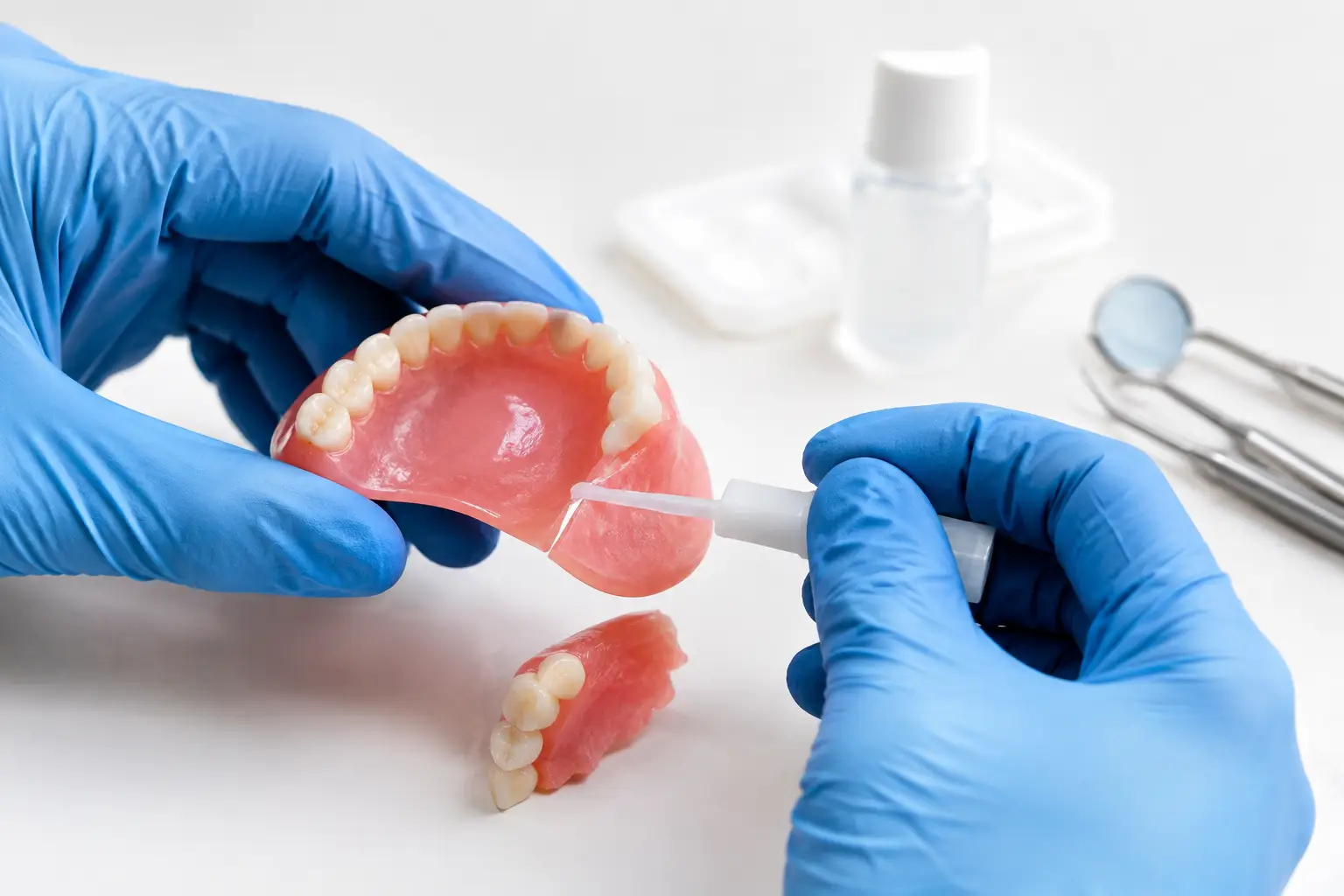
Denture Base Crack Repair for Broken Dentures
Updated: Oct 2
A crack across a denture base can turn an ordinary meal or conversation into a problem quickly. Denture base crack repair is intended to restore the strength and usable shape of a removable denture after the acrylic base has split, weakened, or begun to separate. The right next step depends on where the crack is, whether the denture still fits correctly, and whether there are other signs of damage.
Do not assume a small crack is only cosmetic. A hairline fracture may widen under normal biting pressure, leaving the denture unstable or broken into separate pieces. Set the appliance aside when possible, keep all pieces together, and arrange a professional assessment.
What a Denture Base Crack Usually Means
The denture base is the pink acrylic portion that supports the artificial teeth and rests against the gums. It is built to handle daily use, but repeated chewing forces, accidental drops, changes in the mouth, and poor fit can place stress on the material over time.
A crack often appears in the center of an upper full denture, near a tooth, around a thin area of acrylic, or along an area that has been repaired before. Partial dentures can also crack around clasps, tooth sockets, or areas where the base meets another component. The location matters because it helps show whether the problem is isolated or connected to a larger fit or structural issue.
Sometimes a denture breaks after being dropped. In other cases, it cracks gradually because it rocks during use, because the bite has changed, or because the base no longer rests evenly on the gums. Repairing the visible fracture is necessary, but it may not be the complete answer if the appliance continues to flex in the same area.
When to Stop Wearing a Cracked Denture
A denture that has separated, feels sharp, shifts unexpectedly, or causes soreness should not be forced back into use. Continuing to wear it can widen the crack, irritate the gums, or cause a piece to break away. It can also make the original edges harder to align accurately during repair.
If you must remove the denture, store it in a clean container away from children and pets. Keep every broken piece, even a small fragment. Do not wrap the denture loosely in a tissue, where it can be mistakenly discarded.
A denture that is only lightly cracked may still seem wearable, but that does not mean it is stable. A laboratory can assess the fracture and determine whether the appliance is suitable for repair. If the denture has become uncomfortable, no longer seats fully, or changes your bite, mention that when submitting the request.
Why Home Glues Create More Problems
Household glue, craft adhesive, tape, and hardware-store repair products are not appropriate for a denture base. They can leave residue on the fracture surfaces, alter how the pieces come together, and interfere with professional bonding materials. Some products are not designed for oral use and may create rough areas that irritate soft tissue.
Over-the-counter repair kits may appear convenient, but they are generally temporary measures and can make a later professional repair more difficult. A repaired denture needs accurate alignment. Even a slight change in position can affect comfort, speech, and how the upper and lower teeth meet.
Do not sand, drill, trim, or heat the denture to make a crack disappear. Acrylic can distort with heat, and removing material may weaken an already stressed area. Rinse the appliance gently if needed, but leave the repair area as intact and clean as possible for evaluation.
How Professional Denture Base Crack Repair Works
Professional denture base crack repair starts with an inspection of the appliance. The repair provider evaluates the crack, checks whether pieces fit together accurately, and looks for missing acrylic, loose teeth, worn areas, prior repairs, or damage to metal components in a partial denture.
When a repair is appropriate, the fractured sections are positioned carefully to preserve the denture's original form. The damaged area is prepared and reinforced with compatible denture-base material. The repaired surface is then finished and polished to reduce roughness and restore a usable contour.
The exact approach varies. A clean break with all pieces available may be more straightforward than a fracture with missing material or multiple cracks. A denture with loose teeth, a broken clasp, or a base that has warped may require additional work or a different recommendation. This is why clear photos and an accurate description of the problem are useful before repair arrangements are made.
Repair Is Not Always the Same as Correcting Fit
A repaired crack can restore the physical structure of the denture, but fit should still be considered. Mouth tissues and bone change over time. If a denture has been loose, rocking, or causing pressure spots before it cracked, those conditions may have contributed to the damage.
For example, an upper denture that flexes while chewing may repeatedly stress the center of the base. A lower denture that shifts may develop pressure in one area. In these situations, restoring the crack without addressing the underlying fit concern can leave the appliance vulnerable to another failure.
A dental professional may need to evaluate persistent discomfort, changes in bite, gum soreness, or a denture that no longer fits the way it once did. This is especially true if the crack occurred without a fall or other clear accident. The repair resolves the break; a fit evaluation helps identify why it happened.
Information That Helps a Laboratory Assess the Damage
A direct repair request is easier to review when it includes a short, specific description. State whether the denture is full or partial, upper or lower, and whether it is cracked, fully broken, missing a tooth, or has another concern. Note when the damage occurred and whether the denture was dropped.
Photos can help show the location and extent of the damage. Take clear images in good light from the front, the tissue side, and the cracked area. If the denture has broken into pieces, photograph the pieces placed together without trying to glue them. Include any earlier repair area if it is visible.
Also mention whether the denture was loose, painful, difficult to chew with, or changed in fit before the crack appeared. Those details give the repair provider a more complete starting point and help determine the appropriate next step.
Steps to Take After a Denture Base Crack
Start by removing the denture if it is unstable or uncomfortable. Rinse it gently, place all pieces in a protective container, and avoid any adhesive or self-repair attempt. Then document the issue with photographs and a short explanation.
Denture Repair Laboratory uses a direct contact process so customers can provide their information, describe the repair need, and upload supporting files for review. Clear intake details help the laboratory assess the request and coordinate the repair process efficiently.
If the denture has sharp edges that injured your gums, or if you have ongoing oral pain, contact your dental provider as well. A damaged appliance and irritated mouth tissue may need separate attention.
Care After the Repair
Once the denture is returned, handle it over a folded towel or a sink partially filled with water. This reduces the risk of another break if it slips from your hands. Clean it with products suitable for dentures and a soft brush, not abrasive toothpaste or hot water.
Remove the denture as directed by your dental provider, and keep it stored safely when it is not being worn. If it begins to feel loose, rocks while chewing, or develops a new rough area, do not wait for a complete break. Early attention to a small change can help protect both the denture and your comfort.
A cracked denture base is disruptive, but it does not need to become a permanent interruption. Preserve the appliance, avoid home fixes, and provide clear details so the repair can be evaluated on the condition of the denture itself.
Broken denture? Bring it to our denture repair lab in Stoneham, MA (walk-ins welcome) or call (781) 526-8688. Many repairs are finished the same day.
Related reading: Denture Repair Cost and What You May Pay
Where we help: patients walk in or mail their dentures to us from Boston, Everett, Lowell, Framingham, Worcester, Plymouth, the North Shore, Middlesex & MetroWest, South of Boston, Cape Cod, southern New Hampshire and Providence, RI.
Comments