
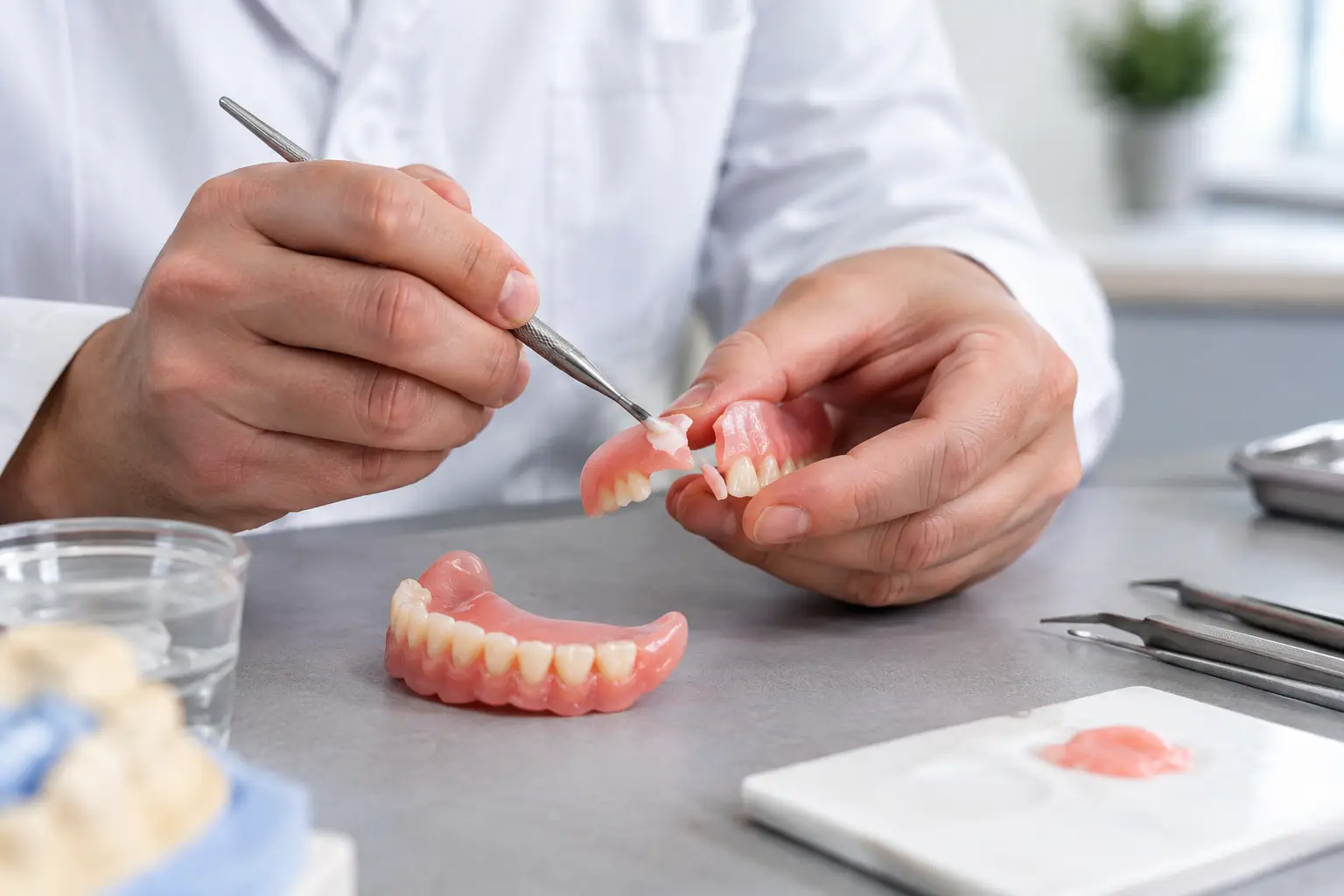
How Denture Repair Shops Handle Broken Dentures
Updated: Oct 2
A denture can fail at the least convenient time: during a meal, while getting ready for work, or before a family event. A cracked base, broken tooth, loose clasp, or denture that no longer sits correctly can affect eating, speaking, and comfort immediately. Denture repair shops provide a focused service for evaluating removable dentures and determining the appropriate repair process.
The right next step depends on the type of damage, the condition of the appliance, and whether the denture still fits your mouth safely. A repair that looks simple from the outside may involve more than joining two pieces together. The goal is to restore function without creating pressure points, a poor bite, or a weak area that breaks again.
What denture repair shops can assess
Professional denture repair starts with a clear description of what happened. If a full denture snapped in half, the break line matters. If a tooth came loose, the condition of the surrounding denture base matters. If a partial denture has a damaged clasp, the framework and the teeth it connects to should be considered before any work is planned.
Common problems include cracks in the acrylic base, a complete fracture, a chipped or detached denture tooth, worn teeth, loose or broken clasps, rough edges, and dentures that have become loose over time. These problems can occur because the denture was dropped, exposed to pressure, worn for many years, or affected by changes in the gums and jawbone.
Not every issue is a repair-only situation. A denture may be structurally intact but no longer fit because the tissues beneath it have changed. In that case, an adjustment, reline, or replacement may be more appropriate than repairing the visible problem. A careful evaluation helps prevent spending time and money on work that will not provide a usable result.
Why fit matters after a break
When a denture breaks, the pieces may no longer return to their original position precisely. Even a small shift can change how the denture contacts the opposing teeth or rests on the gums. If it is repaired in the wrong position, it may feel tight, rock when chewing, or cause sore spots.
For partial dentures, fit is especially important because the appliance works around remaining natural teeth. A damaged clasp or distorted frame can place unwanted force on those teeth. The repair process should account for the denture's stability, not just its appearance.
When to request a denture repair
A visible crack is a reason to act before the denture breaks completely. Continued use can widen the crack, make the repair more difficult, and leave sharp or uneven surfaces. Stop using the denture if it causes pain, cuts the mouth, or feels unstable enough to create a choking risk.
A detached tooth may also need prompt attention, even if the denture can still be worn. The missing area can interfere with chewing and may create an edge that irritates the tongue or cheek. Keep the tooth if you can find it, along with all pieces of the denture. Do not throw away fragments because they may help with evaluation or repair.
A denture that suddenly feels loose without obvious damage also deserves attention. It may be a fit issue rather than a break, but it can still affect speech, chewing, and comfort. Adhesive may temporarily help some wearers, but it does not correct a crack, a broken clasp, or a denture that has changed shape.
What to do before contacting a repair provider
Handle the denture carefully and place it in a protective container. Dentures can break again if they are left on a counter, wrapped in a napkin, or carried loose in a pocket or bag. If the denture is in multiple pieces, keep every piece together.
Do not use household glue, super glue, epoxy, or a do-it-yourself repair kit unless a qualified dental professional has specifically instructed you to do so. These materials can be unsafe in the mouth, create rough surfaces, affect fit, and make a professional repair more difficult. Glue can also prevent the broken surfaces from aligning correctly.
Before submitting a request, gather the basic details: whether the denture is full or partial, where the damage is located, when it occurred, and whether you can still wear it comfortably. Clear photos can be useful for an initial review. Photograph the front, the inside surface that rests against the gums, and the damaged area in good lighting when possible.
Denture Repair Laboratory uses a direct intake process so customers can provide contact information, describe the issue, and upload supporting files for review. This allows the repair request to be assessed with the details needed to determine the appropriate next step.
Information that helps speed up an assessment
A short, specific description is more useful than simply stating that the denture is broken. For example, note whether it cracked down the center, a tooth came out, a metal clasp bent, or the denture has become loose. Include whether there is pain, rubbing, or difficulty closing your teeth together.
If you are helping a parent, spouse, or another family member, include the best phone number for coordinating the repair. Caregivers can also help make sure the denture is packaged safely and that all broken pieces are kept together.
Repair, reline, or replacement: choosing the right path
Many broken dentures can be repaired, but a repair is not always the best long-term option. The decision depends on the appliance's age, the amount of wear, repeated fracture history, and current fit. A denture that has broken once after being dropped may be a good repair candidate. One that has cracked repeatedly in the same location may need a closer review of fit, thickness, bite pressure, or overall condition.
A reline may be considered when the denture remains structurally sound but has loosened as the gums and bone have changed. Relining changes the tissue-facing surface so the denture fits the current shape of the mouth more closely. It does not fix a broken tooth or cracked base by itself, although both services may sometimes be relevant to the same appliance.
Replacement may be recommended if the denture is extensively worn, has multiple repairs, no longer supports a stable bite, or cannot be restored safely. Replacement can involve more planning and expense than a repair, but repeatedly repairing a failing denture can become less practical over time.
Questions to ask about the repair process
Before moving forward, ask what type of issue is being evaluated and whether the denture's fit needs to be checked after repair. Ask what information or photos are needed, how the appliance should be delivered or shipped if applicable, and what condition it should be in when submitted.
You should also ask about expected timing, especially if the denture is essential for eating or speaking. Repair timing varies with the damage, the materials involved, the need for additional assessment, and the provider's workflow. A realistic timeline is better than a rushed repair that does not address the underlying problem.
If the denture causes mouth sores, pain, or changes in your bite, discuss that directly. Those symptoms can indicate that restoring the broken section alone may not resolve the full issue. For dentures supported by implants, or partial dentures involving natural teeth, coordination with a dentist may be needed depending on the problem.
Preventing another denture break
Some accidents cannot be prevented, but daily handling makes a difference. Clean dentures over a folded towel or a sink partly filled with water so they are less likely to break if dropped. Use a protective case when traveling, and keep dentures away from pets, heat, and places where they can be stepped on.
Avoid bending partial denture clasps or forcing a denture into place. A denture should not require excessive pressure to seat. If it feels tight, loose, or painful, have it assessed rather than trying to reshape it at home.
A broken denture disrupts ordinary routines quickly, but clear details and careful handling can make the repair request easier to evaluate. Keep the appliance and all pieces safe, describe the problem accurately, and seek professional help before a small defect becomes a larger one.
Broken denture? Bring it to our denture repair lab in Stoneham, MA (walk-ins welcome) or call (781) 526-8688. Many repairs are finished the same day.
Related reading: Denture Base Crack Repair for Broken Dentures
Where we help: patients walk in or mail their dentures to us from Boston, Everett, Lowell, Framingham, Worcester, Plymouth, the North Shore, Middlesex & MetroWest, South of Boston, Cape Cod, southern New Hampshire and Providence, RI.
Comments