
How to Repair a Loose Denture Clasp Safely
Updated: Oct 2
A loose clasp can turn a partial denture from dependable to distracting in a single day. It may shift when you chew, lift when you speak, or rub against the gum near a supporting tooth. If you need to repair loose denture clasp problems, resist the urge to bend the metal yourself. A clasp is small, but it is part of a precisely fitted appliance. The wrong adjustment can weaken the metal, crack the acrylic base, or make the denture fit worse.
Why a Denture Clasp Becomes Loose
A clasp holds a removable partial denture in place by resting around a natural tooth. Over time, normal insertion and removal can gradually change the shape of the clasp. Metal can flex, supporting teeth can change, and the acrylic portion of the denture can wear or shift.
A clasp may also feel loose when the issue is not the clasp itself. Tartar buildup, a filling that has changed shape, tooth movement, gum recession, or a change in the bite can alter how the denture sits. If the partial once fit well and now rocks, drops, or feels uneven, the appliance may need more than a simple clasp adjustment.
Damage is another possibility. A clasp can become loose after the denture is dropped, stepped on, or placed under pressure in a pocket, bag, or napkin. Even when the metal does not look broken, it may have been pushed out of position.
Signs the Clasp Needs Professional Attention
A loose clasp is not always an emergency, but it should be addressed before it creates additional damage or irritation. Stop using the denture temporarily and request an evaluation if the clasp is visibly cracked, sharp, detached from the acrylic, or no longer reaches the supporting tooth.
Pay attention to changes in comfort as well. Soreness around a tooth, gum redness, a rubbing spot, or pain during chewing can mean the partial is applying pressure in the wrong area. Continued wear can create a sore spot and may place unnecessary stress on the supporting tooth.
If the denture is suddenly much looser than before, check whether there has been a change in your mouth. A loose natural tooth, swelling, a broken tooth, or pain around a tooth that supports the clasp requires dental attention. Repairing the appliance alone will not correct a problem with the tooth or gums underneath it.
Do Not Bend a Loose Denture Clasp at Home
It is understandable to want a quick fix when the partial keeps moving. Pliers, tweezers, and household tools are not safe for clasp adjustment. Denture clasps are made to a specific shape and thickness. A small bend in the wrong direction can cause the metal to fatigue and break later, often at a point that cannot be reliably repaired without additional work.
Avoid heating the clasp or trying to reshape it with hot water. Do not add glue, adhesive, wax, tape, or a coating material to make the denture tighter. These materials can interfere with the fit, make cleaning difficult, and conceal a crack or distortion that needs to be examined.
Over-the-counter denture adhesive is generally intended for full dentures, not for correcting a loose partial clasp. Adhesive can also make it harder to see whether the partial is moving because of a damaged clasp, a worn base, or a change in the mouth.
The safest temporary approach is simple: remove the partial when it is uncomfortable or unstable, keep it in a denture case, and avoid chewing hard, sticky, or crunchy foods with it. Never wrap a denture in a tissue. It can easily be thrown away or crushed.
What a Loose Clasp Repair May Involve
The appropriate repair depends on the type of partial denture and the condition of the clasp, acrylic, and supporting teeth. A laboratory assessment can determine whether the clasp can be adjusted, whether a replacement clasp is needed, or whether the appliance has another structural problem.
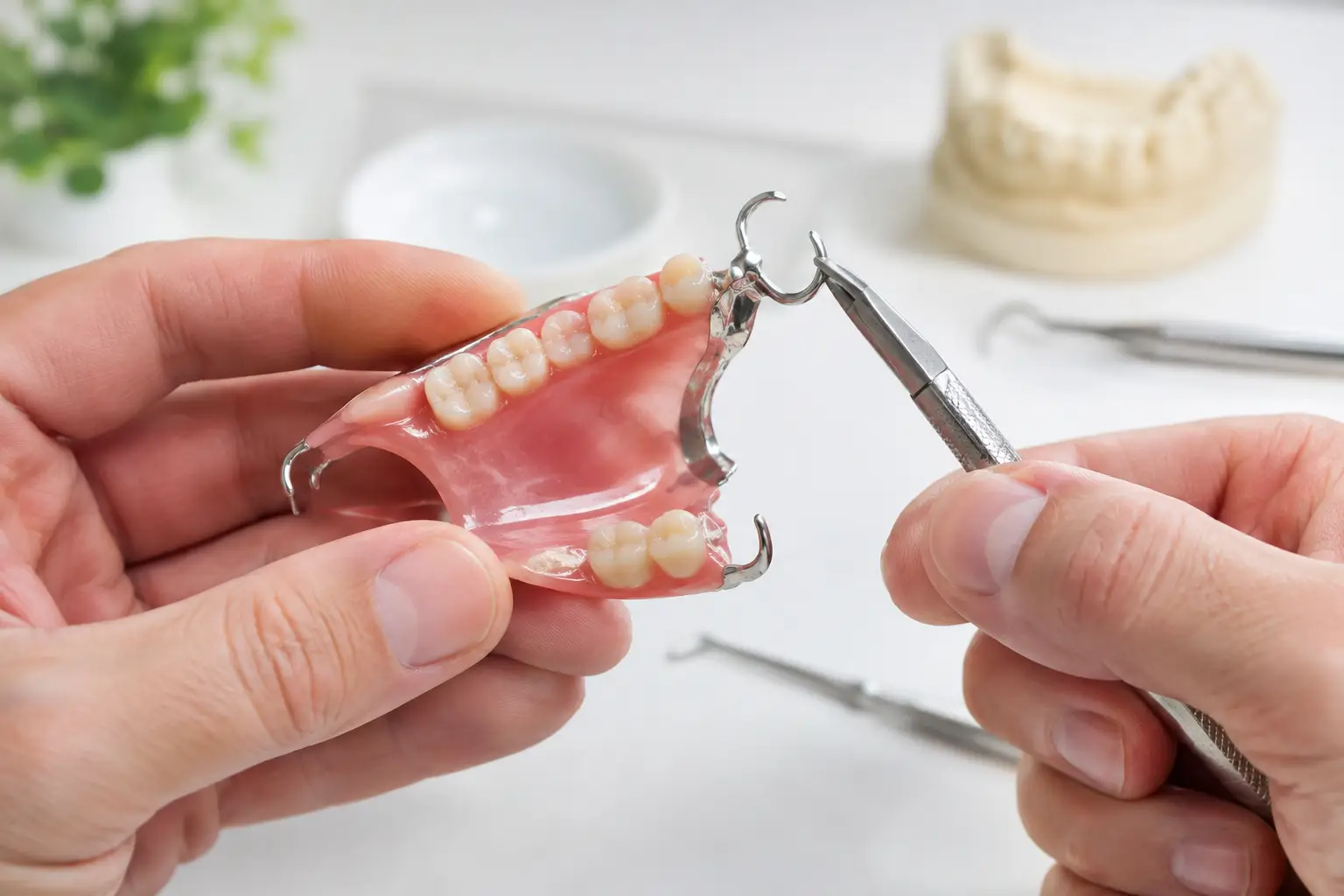
For a metal framework partial, the clasp may need to be carefully adjusted to improve retention. This is a controlled adjustment, not a forceful bend. The technician must consider how the clasp contacts the tooth, how the denture seats, and whether the framework remains stable.
For an acrylic partial with wire clasps, the wire may have moved, loosened from the denture base, or fractured. In some cases, the wire clasp can be repaired or replaced. If the acrylic around the wire is cracked or worn, the base may need attention as well so the repair has proper support.
Sometimes the clasp is functioning as designed, but the denture no longer fits the shape of the gums. A reline, adjustment, or other evaluation may be more appropriate than tightening the clasp. This is why a repair request should describe the full problem, not only the loose metal part.
Information That Helps Evaluate the Repair
Clear details make it easier to determine the next step. When submitting a request, describe when the clasp became loose and whether the denture was dropped, bent, or damaged. Note which side of the mouth is affected and whether the issue occurs when chewing, talking, or simply opening your mouth.
Photos can be useful if they clearly show the entire denture, the loose clasp, and any visible crack or damaged acrylic. Take pictures in good lighting on a clean surface. If possible, include more than one angle. Avoid forcing the clasp into a new position just to take a photo.
It also helps to mention whether the denture still fits over the supporting tooth, whether it rocks, and whether it causes pain or sores. If a tooth feels loose, broken, sensitive, or painful, include that information. A dental provider may need to evaluate the tooth before the denture can be properly adjusted.
Denture Repair Laboratory uses a direct intake process for customers to provide their contact information, explain the problem, and upload relevant files for review. Giving complete information at the start can prevent delays caused by an unclear damage description or missing photos.
Protecting the Clasp After Repair
Once a partial denture fits properly again, daily handling makes a difference. Insert and remove it with your fingers rather than biting it into place. Biting down to seat a partial can place uneven force on the clasps and on the supporting teeth.
Clean the denture each day with a soft denture brush and a cleaner made for removable dental appliances. Use cool or lukewarm water, not hot water, since heat can distort some denture materials. Clean around the clasp carefully, where plaque and food debris can collect.
When the denture is out of your mouth, keep it in a protective case or in water as directed for its material. Keep it away from pets and children. Many clasp repairs begin with a denture that was chewed by a dog or damaged after being left on a counter.
A partial denture should feel secure without requiring force. If it starts to move, pinch, or rub again, stop trying to correct it at home. A prompt repair request gives the clasp and the rest of the appliance the best chance of being restored before a small fit issue becomes a broken denture or a painful sore spot.
Broken denture? Bring it to our denture repair lab in Stoneham, MA (walk-ins welcome) or call (781) 526-8688. Many repairs are finished the same day.
Related reading: How to Repair Denture Metal Framework Safely
Where we help: patients walk in or mail their dentures to us from Boston, Everett, Lowell, Framingham, Worcester, Plymouth, the North Shore, Middlesex & MetroWest, South of Boston, Cape Cod, southern New Hampshire and Providence, RI.
Comments