
When Is Denture Repair Without Dentist Safe?
Updated: Oct 2
A denture can break during a meal, crack after a fall, or suddenly feel unstable when you need it most. When that happens, denture repair without dentist involvement may seem like the fastest answer. In some cases, a repair laboratory can assess a damaged removable denture directly. In others, the denture is signaling a fit problem or oral-health concern that requires a dentist before any repair can be completed safely.
The practical question is not simply whether a denture is broken. It is whether the appliance can be repaired without changing how it fits, functions, or affects the tissues in your mouth.
What denture repair without dentist care can mean
A removable denture is a custom appliance, not a one-size-fits-all item. Full dentures replace an entire arch of teeth. Partial dentures replace selected teeth and may include acrylic, metal components, clasps, or flexible material. Each can fail in different ways.
For an existing denture that has a clean break, a separated tooth, or damage that can be evaluated from the appliance itself, a specialized laboratory may be able to coordinate the appropriate repair process. Clear photos and a description of what happened help determine the next step.
That does not mean every denture problem should be handled as a repair-only issue. A denture that has become painful, loose, difficult to bite with, or damaging to the gums may need a clinical examination. The appliance may be intact while the fit has changed because the mouth has changed. Repairing the visible issue without addressing the cause can leave you with an appliance that still does not work properly.
Protect the denture before arranging a repair
The first priority is to prevent additional damage. Remove the denture if it is cracked, sharp, unstable, or painful to wear. Keep every piece, including a loose tooth, clasp, or small acrylic fragment. Even a small piece can help a technician align the repair accurately.
Rinse the denture gently with cool or lukewarm water. Do not use hot water, which can warp some denture materials. Wrap the pieces in a clean, slightly damp cloth or place them in a secure container. Keep the appliance away from pets, children, sinks, and hard counters, where a second accident is common.
Do not use household glue or a permanent repair kit
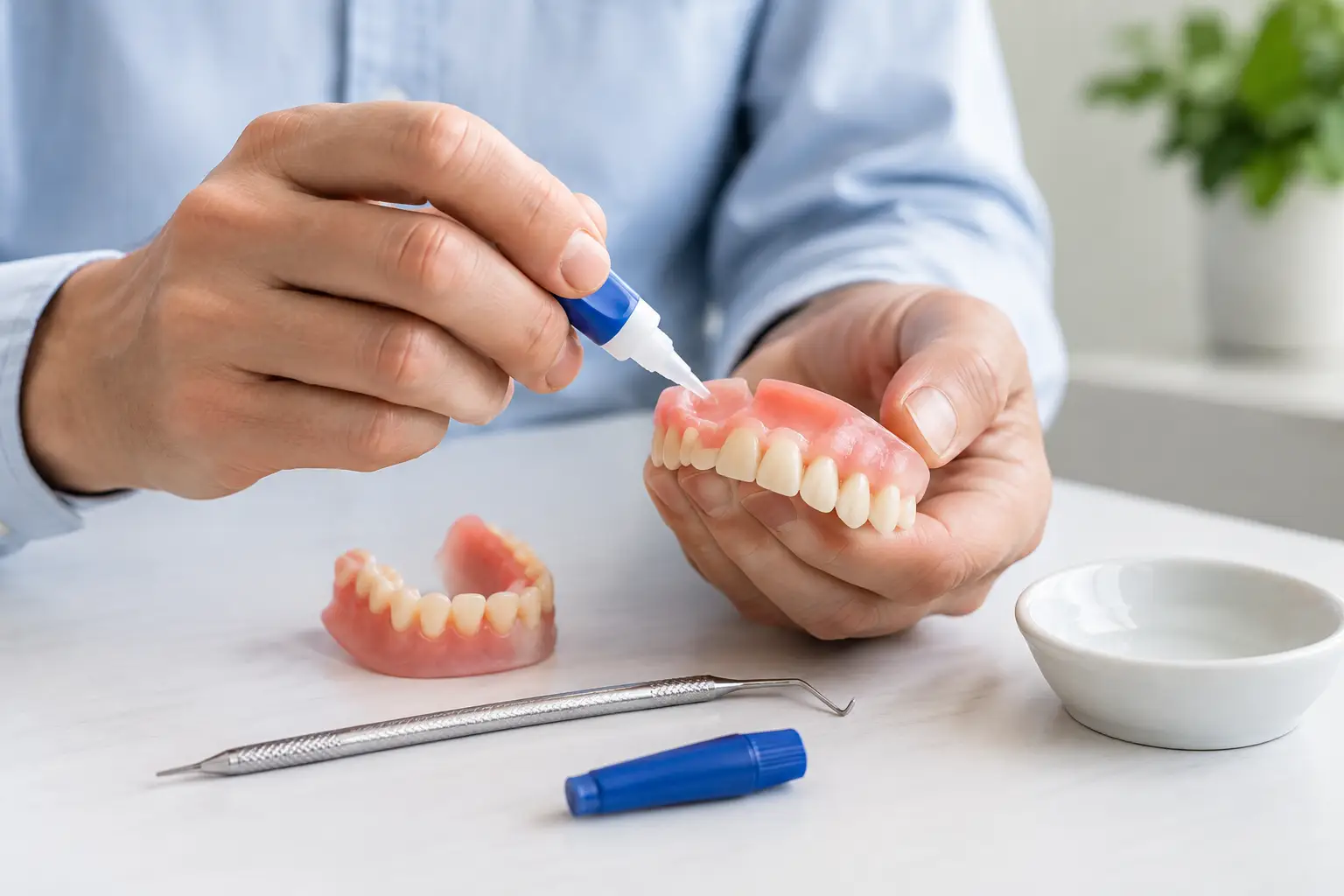
Household adhesives, super glue, craft glue, and many temporary repair products are not designed for long-term oral use. They can create rough edges, interfere with proper alignment, and make a professional repair more difficult. Adhesive may also prevent fractured surfaces from joining correctly.
A repair that looks acceptable outside the mouth can still be unsafe or uncomfortable when worn. A small shift in the way broken pieces are joined can affect your bite, pressure points, speech, and chewing. For partial dentures, a damaged clasp or metal component can place pressure on a remaining natural tooth in the wrong direction.
If you have already applied glue, do not try to scrape it off aggressively or force the denture apart. Set it aside and explain what was used when submitting your repair request. That information helps determine how the appliance should be evaluated.
Which problems may need a repair assessment
A clean fracture through the acrylic base is one of the more common repair requests. Another frequent issue is a denture tooth that has come loose or fallen out. These problems can sometimes be addressed when the remaining denture is stable and the appliance still fits as it did before the damage.
A partial denture with a broken acrylic section may also be repairable. However, partial dentures deserve added caution because their design depends on the relationship between the appliance, remaining teeth, and gums. A broken clasp, bent metal framework, or tooth that feels loose after an accident may require a dentist to examine your mouth first.
It also depends on the age and condition of the denture. An appliance that has fractured more than once may be thin, worn, poorly fitting, or under unusual pressure. Repeating the same repair without identifying the reason for the fracture may not solve the larger problem.
Signs you should contact a dentist first
A repair laboratory works on the denture itself. A dentist evaluates the mouth, bite, gums, remaining teeth, and any underlying condition affecting the denture. That distinction matters when symptoms go beyond a damaged appliance.
Contact a dentist before pursuing a repair-only solution if you have persistent pain, swollen or bleeding gums, sores that do not improve, numbness, signs of infection, or a denture that suddenly no longer seats correctly. The same applies if your bite has changed, a remaining tooth is loose or painful, or a partial denture has damaged or bent metal components.
Do not wear a broken denture that has sharp edges or moves unpredictably. Continuing to wear it can irritate soft tissue and may turn a manageable repair into a more complicated situation. If you cannot wear the denture comfortably, leave it out until you receive appropriate guidance.
How to submit a clear denture repair request
Good intake information helps avoid delays and helps the repair provider understand what happened before the denture arrives. Describe the problem in plain terms: where the denture broke, whether all pieces are available, when the damage occurred, and whether it fit comfortably before the incident.
Photos are especially useful. Take clear images in good lighting from the front, the tissue side, and close to the damaged area. If there are separate pieces, photograph them together without trying to press or glue them into place. For partial dentures, include images of clasps, metal sections, and the remaining denture teeth.
When submitting a request to Denture Repair Laboratory, provide your contact information, a direct description of the issue, and supporting files when available. If the denture has been repaired before or altered with an adhesive, include that detail. The goal is a straightforward assessment and a clear recommendation on the appropriate next step.
Before sending or transporting a denture, make sure it is clean and fully protected. A rigid container with padding is safer than wrapping the appliance loosely. Keep separate pieces together in the same labeled container so nothing is lost.
Eating and speaking while the denture is out
Being without a denture can disrupt meals and daily conversation. It is tempting to force a cracked appliance back into service, particularly when the damage seems minor. That choice can cause more breakage or create sore spots quickly.
Choose softer foods that do not require strong biting or tearing. Cut food into small pieces, chew slowly, and avoid hard, sticky, or chewy foods. If you wear a full upper denture, take care with foods that pull against the appliance. If you have a partial denture and enough healthy natural teeth to eat without it, follow the guidance you have received from your dentist about what is appropriate for your individual situation.
Speech may feel different without the denture, especially for words that require contact between the tongue, teeth, and palate. Give yourself extra time for calls or conversations. This is inconvenient, but it is usually safer than wearing an appliance with a fracture line, sharp edge, or loose tooth.
A repair should restore function, not hide a problem
The best outcome is not simply a denture that looks whole again. It is a denture that can be evaluated for structural stability and returned to use only when it is appropriate to wear. A visible break can be the result of a drop, but it can also point to pressure from a changing fit, an uneven bite, or worn materials.
After a repair, pay attention to how the denture feels. It should not create new pain, rocking, rubbing, or difficulty when you close your teeth together. If it does, stop wearing it and seek guidance. Your comfort and the condition of the tissues beneath the denture are part of whether the repair is successful.
A broken denture is disruptive, but careful handling and a clear repair request can move the situation forward. Save every piece, avoid do-it-yourself adhesives, and provide accurate photos and details so the appliance can be assessed on the facts rather than guesswork.
Broken denture? Bring it to our denture repair lab in Stoneham, MA (walk-ins welcome) or call (781) 526-8688. Many repairs are finished the same day.
Related reading: How Denture Repair Shops Handle Broken Dentures
Where we help: patients walk in or mail their dentures to us from Boston, Everett, Lowell, Framingham, Worcester, Plymouth, the North Shore, Middlesex & MetroWest, South of Boston, Cape Cod, southern New Hampshire and Providence, RI.
Comments