
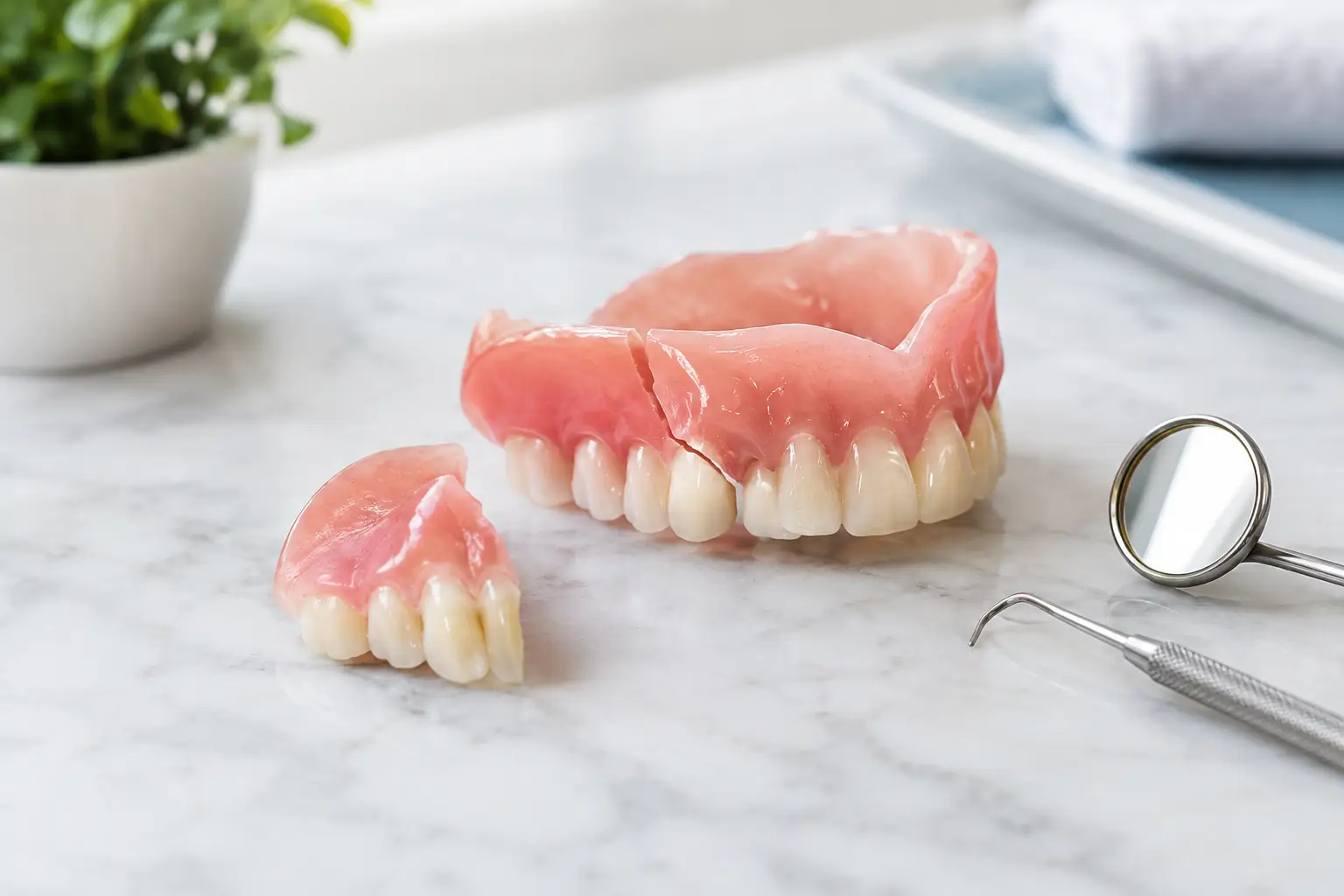
Can Cracked Dentures Be Repaired? What to Know
A crack in a denture can quickly affect eating, speaking, and comfort. Can cracked dentures be repaired? In many cases, yes. The right repair depends on where the crack is, how far it extends, whether the denture still fits correctly, and the condition of the material around the damage.
A professional assessment is the safest first step. Even a small surface crack can spread under normal chewing pressure, and a denture that appears usable may no longer sit properly against the gums or remaining teeth.
Can Cracked Dentures Be Repaired?
Many cracked full and partial dentures can be repaired when the appliance is brought in before the crack becomes a complete break. A laboratory can examine the damaged area, stabilize the material, and restore the affected section when the surrounding denture base is sound.
The repair process is not the same for every denture. Acrylic dentures, partial dentures with acrylic components, and dentures with metal frameworks each require different handling. The location of the crack also matters. A crack through the base may be repairable, while damage near a tooth, clasp, implant attachment, or metal component may need a more detailed evaluation.
A repair may not be the best option if the denture is severely warped, repeatedly cracking in the same place, missing a large section, or no longer fitting the mouth. Repeated damage can point to changes in the gums, bite, remaining natural teeth, or the way the denture is being used. Repairing the visible crack without addressing the underlying issue may only provide a short-term result.
What Causes Dentures to Crack?
Dentures are made for daily function, but they are not indestructible. A dropped denture is a common cause of a sudden crack or fracture. Dentures can also crack gradually from repeated flexing during chewing, especially when the fit has changed over time.
Heat can weaken or distort denture material. Leaving dentures in hot water, near a heat source, or in a hot vehicle can affect the base. Biting hard foods, using dentures to open packaging, or putting uneven pressure on one side can also create stress points.
A crack may develop because the denture has become loose. When a denture no longer rests evenly on the gums, it can flex more than intended. Changes in the shape of the jaw and gums are common over time, particularly after teeth have been removed. A denture that once fit well may need adjustment, relining, or replacement in addition to any repair.
Signs You Should Stop Wearing a Cracked Denture
Do not continue wearing a denture simply because the crack looks small. Pressure from chewing can turn a minor crack into a full break, and damaged edges can irritate the gums, tongue, cheeks, or lips.
Stop wearing the denture and request an assessment if it feels loose, rocks when you bite, causes new sore spots, has a sharp edge, or makes your bite feel different. The same applies if a tooth has loosened, a clasp has bent, or part of the denture has separated.
If the denture has broken into pieces, keep every piece. Even small fragments can help with a more accurate repair. Place the denture and any pieces in a clean container to avoid loss or additional damage.
Do Not Use Household Glue
Household glue, super glue, adhesive tape, and do-it-yourself repair materials are not appropriate for denture repair. These materials are not designed for use in the mouth. They can leave residue, create rough surfaces, interfere with proper alignment, and make a professional repair more difficult.
A denture that has been glued at home may appear intact but can be slightly misaligned. Even a small change in position can affect how it fits, how you chew, and where pressure lands on the gums. It can also mask a larger crack beneath the surface.
Over-the-counter repair kits may offer a temporary option in limited circumstances, but they do not replace a professional evaluation. If you use any temporary material, avoid treating it as a permanent repair and arrange professional help as soon as possible.
How a Professional Repair Is Evaluated
A repair provider first looks at the type of denture and the extent of the damage. Clear photos can be useful for an initial review, especially when they show the crack from several angles and include the full appliance.
The denture itself must still be evaluated for fit, alignment, and material condition. A laboratory may determine that the crack can be repaired directly, that an additional adjustment is needed, or that the appliance should be remade because repair would not provide a dependable result.
For a clean crack with stable surrounding acrylic, the damaged area may be prepared and reinforced with compatible denture material. If a tooth has come loose, it may be possible to secure or replace it, depending on the condition of the denture base. Broken clasps, metal framework damage, and attachment problems require a different assessment because the repair must restore both strength and function.
What to Do Before Sending a Repair Request
Handle the denture carefully and avoid testing the crack by bending it. Rinse off loose debris with cool or lukewarm water. Do not use hot water, harsh cleaners, or abrasive tools on the damaged area.
Take clear photos in good lighting if possible. Photograph the front, the inside surface that rests against the gums, and close-up views of the crack or broken area. If the denture is in multiple pieces, place the pieces together without forcing them and photograph how they align.
When submitting a request, describe what happened and when the problem started. Mention whether the denture was dropped, whether it has been loose, whether it causes pain, and whether you have tried any temporary repair. This information helps the repair provider understand the likely condition of the appliance before the next step is arranged.
Denture Repair Laboratory uses a direct request process that allows customers to provide contact details, explain the damage, and upload supporting files for review. A clear description and useful photos can help move the assessment forward efficiently.
When a Repair May Not Be Enough
A repaired denture should feel stable and comfortable. If a denture continues to crack, shifts during use, causes pressure sores, or changes the bite, the issue may extend beyond the damaged area. The mouth changes over time, and a denture can reach a point where a repair alone no longer restores reliable function.
This does not mean every crack requires a new denture. It means the decision should be based on the condition of the full appliance, not only the visible damage. A professional review can identify whether the crack is an isolated problem or part of a larger fit issue.
Until the denture is assessed, protect it from further stress, keep all broken pieces together, and avoid quick fixes that could compromise the repair. Prompt action gives a cracked denture the best chance of being restored safely and used comfortably again.
Comments