
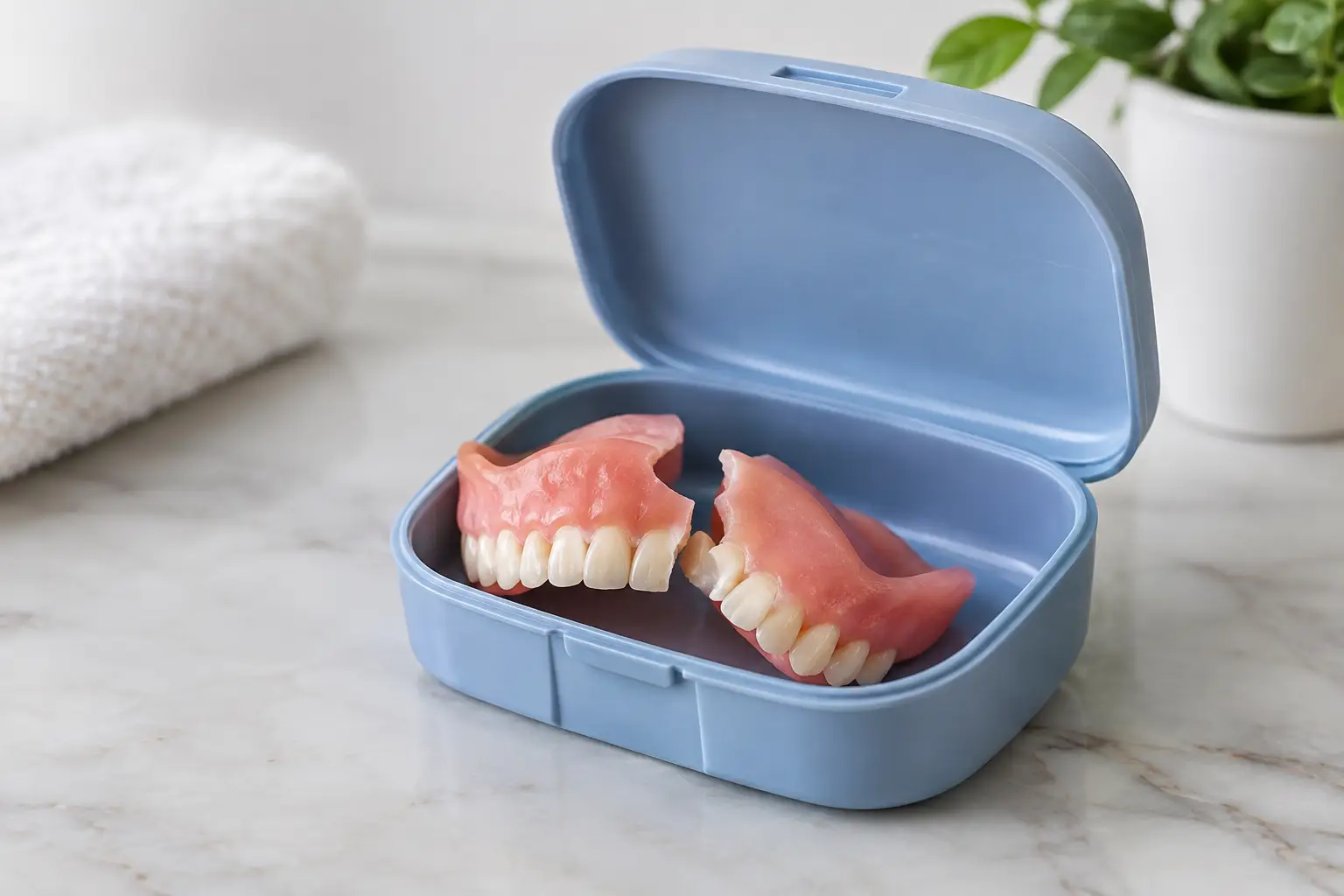
How to Store Broken Dentures Before Repair
A broken denture can disrupt eating, speaking, and daily comfort without warning. Knowing how to store broken dentures correctly helps prevent additional damage and gives a repair provider the best chance to assess all affected parts. The immediate goal is simple: keep every piece clean, protected, and together until professional repair can be arranged.
Do not try to force the denture back into place, bend it into shape, or glue it at home. Even a small alignment change can affect how the denture fits after repair.
How to Store Broken Dentures Safely
First, collect every piece you can find. This includes larger sections of the denture, loose teeth, wire clasps from a partial denture, and small acrylic fragments. Place the pieces on a clean towel or other soft surface while you inspect them. A towel makes small pieces easier to see and reduces the risk of another crack if a piece is dropped.
Handle the denture gently and avoid snapping broken sections together to test the fit. The break may look clean, but pressure can chip the acrylic edges, distort a clasp, or cause a separate crack elsewhere. Keep the pieces in the position in which you found them rather than trying to reassemble them.
If the denture broke while it was being worn, rinse your mouth with water and check for irritation, cuts, or a loose natural tooth. Do not continue wearing a broken full or partial denture. Sharp edges and unstable sections can injure gums, cheeks, the tongue, or remaining teeth.
Rinse With Cool Water Only
If the denture has food debris or saliva on it, rinse the pieces carefully under cool running water. Do not use hot water. Heat can warp denture acrylic, particularly if the appliance is already cracked or under stress. Warping may prevent the denture from seating correctly and can make repair more difficult.
Use only a gentle rinse at this stage. Do not scrub a break line with a stiff toothbrush, scrape away material from the damaged area, or soak the pieces in harsh household cleaners. Bleach, strong chemicals, and abrasive products can damage acrylic, alter the surface, or affect metal components on a partial denture.
After rinsing, let the pieces air-dry briefly on a clean towel. Patting them dry is acceptable if needed, but do not rub along the broken edges. The goal is to remove moisture without losing a small fragment or creating extra pressure on the damaged area.
Use a Rigid, Labeled Container
The safest storage option is a clean, rigid container with a secure lid. A denture case is useful if it closes firmly and has enough room for the pieces to rest without being pressed together. A small food-storage container can also work when lined with a clean, slightly damp paper towel or soft cloth.
The lining should cushion the denture pieces, not wrap them tightly. Place each fragment inside the container carefully, leaving enough room so pieces cannot shift and strike one another during transport. If a tooth has come loose, place it in a small sealed bag or wrapped section of soft material inside the same container. Keep all parts together.
Label the container clearly if someone else may handle it. Write the wearer’s name and a simple note such as “broken denture - keep all pieces.” This is especially helpful for caregivers, assisted-living staff, or family members coordinating repair for another person.
Avoid storing broken dentures loose in a pocket, purse, napkin, plastic grocery bag, or paper cup. These locations make it easy to lose a piece, sit on the denture, or accidentally throw it away. Paper towels are a frequent source of accidental loss because they can be mistaken for trash.
Keep Broken Dentures Away From Heat and Pressure
Store the container at room temperature in a secure location. Keep it away from direct sunlight, heaters, vehicle dashboards, stovetops, and very hot water. Denture materials can change shape when exposed to heat, and a distorted denture may no longer match the contours of the mouth.
Do not place anything on top of the container. Broken acrylic is vulnerable at the fracture line, and metal clasps on partial dentures can bend under pressure. A countertop cabinet, bedside table, or other stable indoor location is generally better than a crowded bag or drawer.
Pets are another concern. Dentures often retain a scent that attracts dogs, and chewing can destroy both the appliance and small components needed for repair. Store the container where pets and young children cannot reach it.
Should Broken Dentures Be Kept in Water?
For a short period, a clean denture can be kept in a closed container with cool water to help prevent drying. However, storage depends on the type and condition of the appliance. If there are loose teeth, metal parts, multiple fragments, or a very fragile break, a cushioned dry container may be the safer choice for transport because pieces are less likely to shift around.
Never use hot water, and do not soak a denture in a solution unless it is intended for dentures and used according to its directions. When uncertain, prioritize protection from movement and contact a repair provider for instructions based on the damage.
Do Not Use Household Glue or Repair Kits
Home repair attempts can turn a manageable break into a more complicated problem. Super glue, epoxy, craft adhesive, tape, and other household products are not made for oral appliances. They can leave residue along the break, create an uneven fit, irritate oral tissues, and interfere with professional repair work.
A glued denture may also break again under chewing pressure, sometimes in a different location. If the appliance does not fit exactly as it did before, continuing to wear it can create sore spots or put excess stress on remaining natural teeth.
Over-the-counter repair kits may appear convenient, but they are not appropriate for every type of damage. A cracked denture base, broken tooth, detached clasp, or denture that no longer fits may require different repair methods. Keep the appliance intact and allow a repair professional to evaluate the condition.
Store Partial Dentures With Extra Care
Partial dentures need special attention because they may have metal clasps, framework, or attachment areas that fit around natural teeth. Do not bend a clasp back into place with fingers or pliers. A slight change can affect retention, comfort, and the fit against nearby teeth.
If a wire or clasp is loose, protect it from catching on fabric or the container lining. Position the partial denture so the wire is not bearing weight, then close the container carefully. Include any loose tooth or acrylic fragment with the partial denture, even if it seems minor.
If the partial denture broke near a natural tooth, avoid using the appliance until it has been assessed. A damaged partial can rub against the tooth or gumline and may cause pain or further damage.
Prepare Information for the Repair Request
Once the denture is stored safely, gather a few details before contacting a repair service. Clear information helps the provider understand the issue and determine the appropriate next step. Note when the damage happened, whether the denture was dropped or broke during normal use, and whether all pieces were recovered.
Take clear photos in good lighting if possible. Photograph the denture from both sides, the visible break line, any loose tooth or clasp, and the separate pieces placed next to one another. Do not force the pieces together for the photo. Images should show the damage as it is.
It also helps to describe whether the denture was comfortable and fitting properly before it broke. If the appliance had already felt loose, caused soreness, or developed a crack, include that information. A new break can sometimes be connected to an underlying fit issue or prior wear.
When submitting a repair request to Denture Repair Laboratory, provide your contact information, a brief description of the damage, and any available supporting photos or files. Keep the denture stored in its container unless you receive instructions for the next step.
When to Seek Prompt Dental Care
A repair service can address damage to the appliance, but mouth injuries and certain symptoms require dental attention. Seek prompt care if there is significant bleeding, severe pain, swelling, a suspected broken natural tooth, or a sharp denture edge that has caused a deep cut.
If you rely on dentures for daily meals, choose softer foods while the appliance is out of use. Avoid chewing hard foods without the denture if doing so causes discomfort or places strain on remaining teeth. Do not alter your denture to make it usable temporarily.
A broken denture is easier to evaluate when every part is present, clean, and protected. Put the pieces in a secure container, leave the repair to a professional, and provide clear details when you request help.
Comments