
Denture Reline Versus Repair Explained Clearly
A denture can feel wrong for more than one reason. It may be cracked after a drop, loose because your gums and jaw have changed shape, or uncomfortable because a tooth or clasp is damaged. Knowing the difference between denture reline versus repair helps you describe the problem clearly and move toward the appropriate service.
A repair restores a broken or damaged part of the appliance. A reline changes the tissue-facing surface so the denture fits the current shape of your mouth. The two services can overlap in some situations, but they solve different problems. A denture that is loose is not always broken, and a denture that has broken is not always properly fitting.
What denture repair addresses
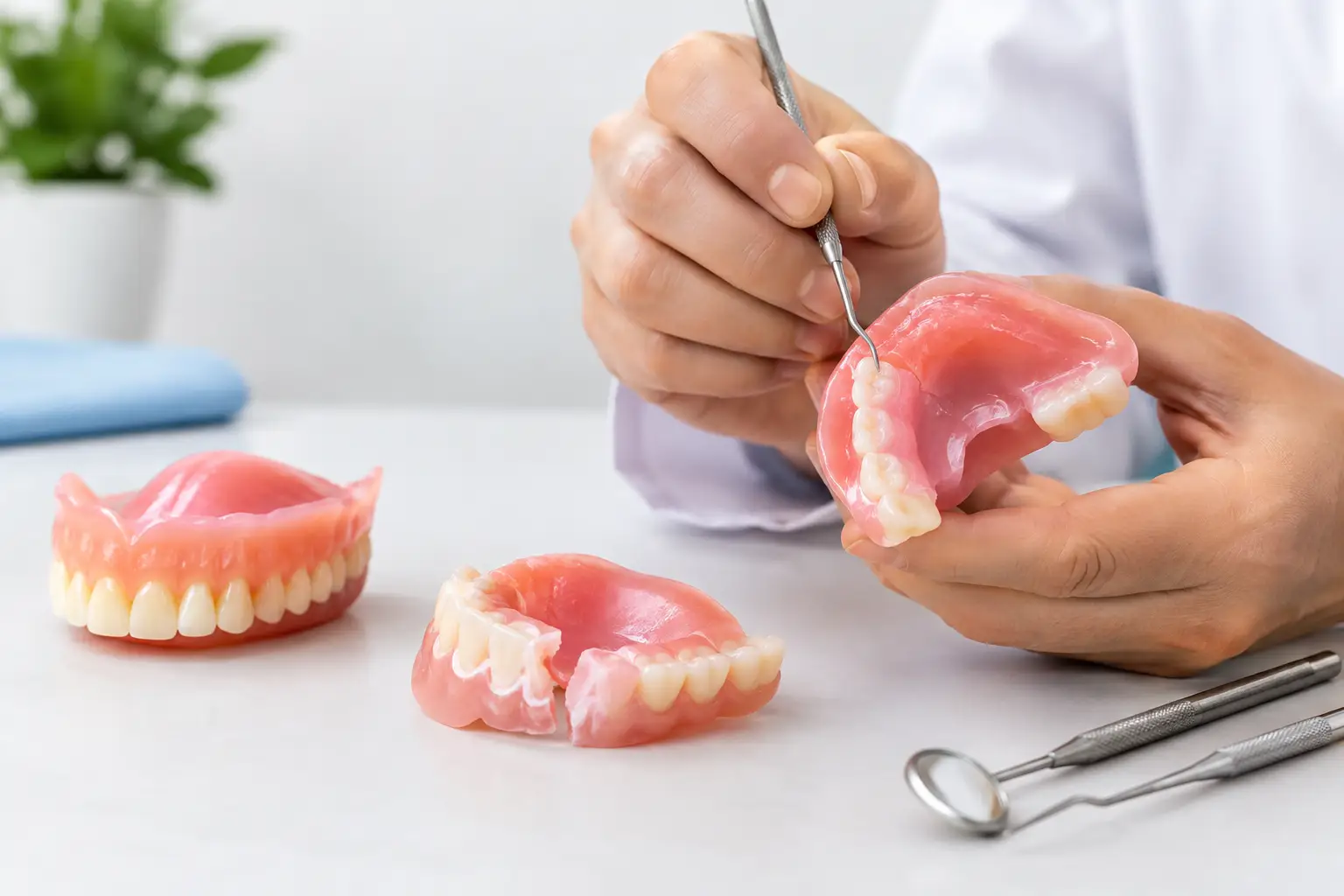
Denture repair focuses on damage to the appliance itself. Common examples include a cracked denture base, a denture broken into pieces, a loose or missing denture tooth, or a damaged clasp on a partial denture. These problems can interfere with chewing, speech, appearance, and the stability of the appliance.
A professional assessment identifies whether the damaged area can be restored and whether the repaired denture will still fit correctly afterward. A clean break may appear straightforward, but the reason it broke matters. Dentures can crack after being dropped, but repeated cracking may also point to changes in fit, uneven bite pressure, or wear in the acrylic.
Do not use household glue, adhesive tape, or a do-it-yourself repair kit to put a denture back together. These materials can create an uneven surface, change the way the pieces meet, and make a professional repair more difficult. Some glues are not intended for use in the mouth. If possible, keep all broken pieces, rinse them gently, and set them aside for evaluation.
What a denture reline addresses
A denture reline is used when the denture is intact but no longer fits the gums securely. Your mouth does not remain the same shape after teeth are removed. Bone and gum tissue can gradually change, which can leave a denture with gaps between the base and the tissue it rests on.
Those gaps can cause movement during meals or conversation. Food may collect beneath the denture, and sore spots may develop where the appliance shifts or presses unevenly. Adhesive may provide short-term help for a denture that has become mildly loose, but it does not correct a fit that has changed significantly.
During a reline, an impression is used to reshape the inner surface of the denture to match the current contours of the mouth. The visible teeth and outer appearance may remain largely unchanged. The purpose is better contact, stability, and comfort.
A reline should begin with an appropriate oral evaluation. Tender tissues, persistent sores, major changes in bite, or signs of infection need attention before the fit of the denture is changed. For this reason, a reline is different from simply adding material to a loose denture at home.
Denture reline versus repair: how to tell the difference
The simplest question is whether the problem is damage or fit. If the denture has a fracture, a missing tooth, a broken clasp, or separated pieces, repair is usually the immediate concern. If it is whole but rocks, slips, rubs, or feels larger than it used to, a reline may be the more relevant next step.
Some situations require both. For example, a lower denture that has been loose for a long time may crack from repeated flexing. Repairing the crack can restore the structure, but it may not address the loose fit that contributed to the problem. Likewise, a partial denture with a broken clasp can need repair even when the acrylic base still fits well.
Pay attention to when the issue started. A denture that suddenly broke after being dropped is different from one that has felt unstable for months and then developed a crack. That history gives the service provider useful context about the condition of the appliance.
Signs that a repair may be needed
A repair assessment is appropriate when you notice one or more of these problems:
A visible crack, chip, or split in the acrylic base
A denture that has broken into two or more pieces
A tooth that is loose, missing, worn down, or detached
A metal clasp that is bent, broken, or no longer holds as it should
A sharp edge that developed after damage
Stop wearing the denture if a sharp, broken, or unstable area is irritating your mouth. Continuing to wear a damaged appliance can worsen the break or injure soft tissue.
Signs that a reline may be needed
Fit problems usually develop gradually, although they can become noticeable quickly once eating or speaking is affected. A reline may be worth discussing when the denture slides while you talk, lifts when you chew, leaves recurring sore spots, or requires more adhesive than before.
Other clues include food repeatedly getting under the denture, clicking during speech, or a lower denture that will not stay settled in place. These symptoms do not automatically mean a reline is the answer. A dentist may need to check your mouth and bite before deciding whether a reline, adjustment, repair, or a replacement denture is appropriate.
When a reline is not the best next step
Relining can improve fit, but it cannot correct every denture problem. If the teeth are severely worn, the bite has changed substantially, the denture base is repeatedly cracking, or the appliance is no longer structurally sound, a reline alone may not provide a reliable result.
The timing of a reline also matters. After recent tooth removal or other major oral changes, the gums and bone may still be healing and reshaping. A dental professional can determine whether a temporary approach, a reline at a later stage, or another treatment is more suitable.
A denture that causes ongoing pain, bleeding, swelling, mouth sores that do not heal, or a major change in how your teeth come together should not be treated as a routine fit issue. Seek dental evaluation promptly. The goal is not only to make the denture more comfortable, but also to identify why the problem is occurring.
Preparing a repair request
Clear information makes an assessment easier. Describe what happened, when it happened, and whether the denture was loose or uncomfortable before the damage occurred. If a tooth, clasp, or section of acrylic has come off, retain every piece you can find.
Photos can also help show the location and extent of visible damage. Take images in good light from more than one angle, including the inside surface and the broken area. Do not force broken sections together for a photo, and do not attempt to reshape sharp edges yourself.
For a direct repair inquiry, provide the appliance type if you know it - full upper denture, full lower denture, or partial denture - along with a concise description of the issue. Denture Repair Laboratory uses a contact process that allows you to explain the problem and upload supporting files for review.
Protect the denture while you arrange care
Handle dentures over a folded towel or a sink filled with water to reduce the chance of further damage if they slip. Keep them away from hot water, which can warp some denture materials. Store broken pieces in a clean container and avoid dry conditions that could affect the material.
The right choice between a denture reline versus repair comes down to the source of the problem: restore damage when the appliance is broken, and address fit when your mouth has changed. If you are unsure, describe both the visible condition and how the denture feels when worn. That practical detail is often the fastest way to identify the next appropriate step.
Comments