
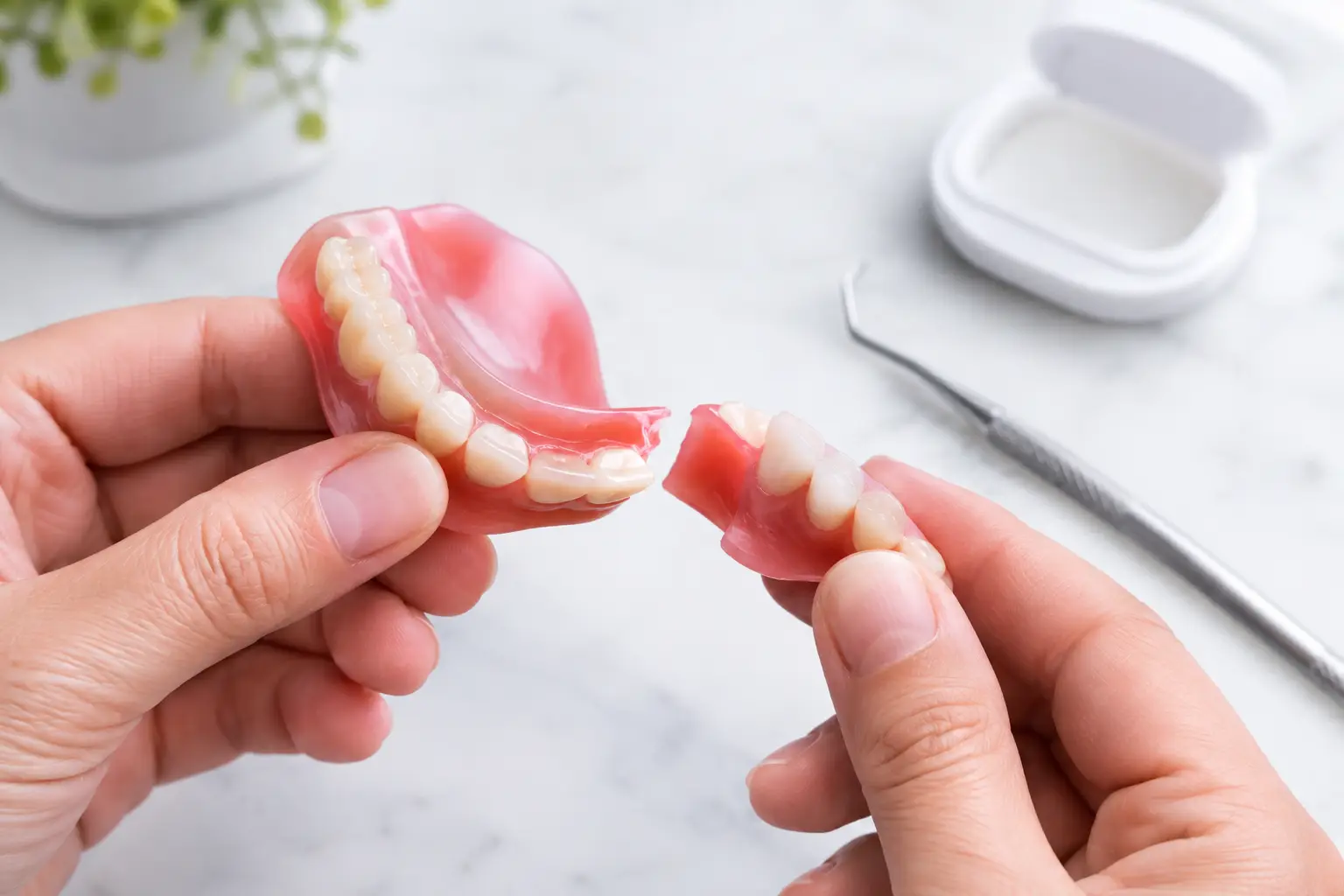
How to Fix a Broken Tooth Denture Safely
A tooth coming loose from a denture can turn an ordinary meal or conversation into a problem. If you need to fix broken tooth denture damage, set the appliance aside, keep every piece you can find, and arrange a professional assessment. A repair that looks simple can affect fit, bite, comfort, and the strength of the denture.
What to Do When a Denture Tooth Breaks or Comes Out
Start by removing the denture if it is still in your mouth. Do not keep wearing it to test whether it will hold. A loose tooth or sharp acrylic edge can irritate your gums, and continued pressure may turn a small repair into a larger crack or break.
Place the denture and any loose pieces in a clean container. If the tooth has fallen out, save it even if it appears chipped, worn, or damaged. The original tooth can help a repair laboratory identify its size, shape, shade, and position. If you cannot find it, the denture may still be repairable, but the missing piece is useful information.
Rinse the appliance gently with cool or lukewarm water. Avoid hot water, which can distort denture material. Do not scrub aggressively around the damaged area. Take clear photos of the front, back, and chewing surface if possible, especially when a tooth is missing or the base is cracked. These images can help explain the issue when you submit a repair request.
Do Not Use Household Glue to Fix a Broken Tooth Denture
Super glue, craft glue, epoxy, and other household adhesives are not appropriate for dentures. They are not designed for use in the mouth, may leave rough residue, and can interfere with a proper repair. Glue can also make it harder for a technician to position the tooth correctly or bond it securely to the denture base.
Over-the-counter temporary repair materials have limits as well. They may seem useful when you need a quick answer, but they can alter how the denture seats against the gums or how your teeth meet. A tooth that is even slightly out of position can create pressure points, affect speech, and make chewing uncomfortable.
Do not try to reshape the area with a file, knife, or sandpaper. Dentures are carefully shaped around your mouth. Removing material from the wrong place can damage the fit and weaken the appliance.
Why a Missing Denture Tooth Needs Professional Attention
A denture tooth does more than fill a visible gap. It supports normal chewing, helps maintain the bite, and contributes to the way the denture distributes force. On a partial denture, it may also work alongside clasps and neighboring natural teeth. On a full denture, the tooth placement helps stabilize the appliance during daily use.
The repair itself depends on what failed. Sometimes only the tooth has separated from the base. In other cases, the tooth came out because the acrylic beneath it cracked, the denture was dropped, or the bite has placed excess force in one spot. A repair that replaces the tooth without addressing damage in the base may not last.
Wear and fit matter, too. Dentures change over time as gums and bone contours change. If the denture has recently become loose, rocks when you bite, or repeatedly loses teeth in the same area, the problem may involve more than the missing tooth. The repair provider may need to assess whether the denture requires additional restoration or whether you should consult your dentist about fit and oral tissues.
Information That Helps a Repair Laboratory Assess the Damage
A direct repair request moves more efficiently when it includes a clear description of what happened. Explain whether the tooth broke, became loose, or came completely out. Include when the damage occurred and whether the denture can still be worn without pain or instability.
Photos are particularly helpful when they show the entire denture and a close view of the damaged area. For a partial denture, include images of the metal or flexible framework, clasps, and remaining teeth. For a full denture, show the palate or underside as well as the front and chewing surfaces. Good lighting and a plain background make the damage easier to see.
It also helps to mention related issues: a crack across the base, a sharp edge, a loose clasp, an old repair, or a change in how the denture fits. These details give the technician a better starting point than a photo of the missing tooth alone. Denture Repair Laboratory uses a contact process that allows customers to describe the repair need and provide supporting files for review.
When to Contact a Dentist First
A repair laboratory can address damage to the removable appliance, but some concerns require dental evaluation first. Contact a dentist if you have mouth pain, swelling, bleeding, sores that do not improve, signs of infection, or an injury involving natural teeth. These are oral health concerns, not just denture damage.
You should also contact a dentist if the denture broke after a fall or facial injury, especially if you have jaw pain or difficulty opening and closing your mouth. If a partial denture tooth came loose near a natural tooth that is also painful or mobile, the supporting tooth should be examined.
If there is no pain or injury and the issue is limited to the denture, a repair assessment is the practical next step. The condition of the appliance, the type of material, and the location of the damage determine what repair is appropriate.
Protect the Denture While You Wait for Repair
Store the denture in a safe container, away from heat, pets, and children. Keep the loose tooth with it in a separate small bag or wrapped safely so it does not get lost. Do not place the appliance in boiling water or leave it on a radiator, dashboard, or other hot surface.
If you must manage without the denture for a short period, choose softer foods and cut food into small pieces. Avoid biting into hard foods, sticky foods, or anything that requires strong front-tooth pressure. This is especially useful when a front tooth is missing, since trying to bite with an unstable denture can worsen the damage.
Clean the denture as you normally would, but use a light touch around the broken area. If a fractured section moves or catches on a cloth or brush, stop handling it and keep it protected until it can be inspected.
Avoid Repeat Breaks After the Repair
A repaired denture still needs routine care. Handle it over a folded towel or a sink partly filled with water so an accidental drop is less likely to cause another break. Remove it carefully rather than pulling on a single tooth or clasp. Use a denture brush and cleaner intended for removable appliances, not abrasive toothpaste that can scratch acrylic surfaces.
Pay attention to changes in fit. A denture that starts clicking, lifting, rocking, or rubbing may be under uneven stress. Addressing those changes early can help prevent a tooth from loosening or the base from cracking again. Partial denture wearers should also keep regular dental appointments to monitor the natural teeth that support the appliance.
A broken denture tooth does not need to become a long-term disruption. Keep the appliance and every loose piece, avoid household adhesives, document the damage clearly, and submit the details needed for a professional repair assessment. That gives the repair team the clearest path to restoring a denture you can use with confidence.
Comments