
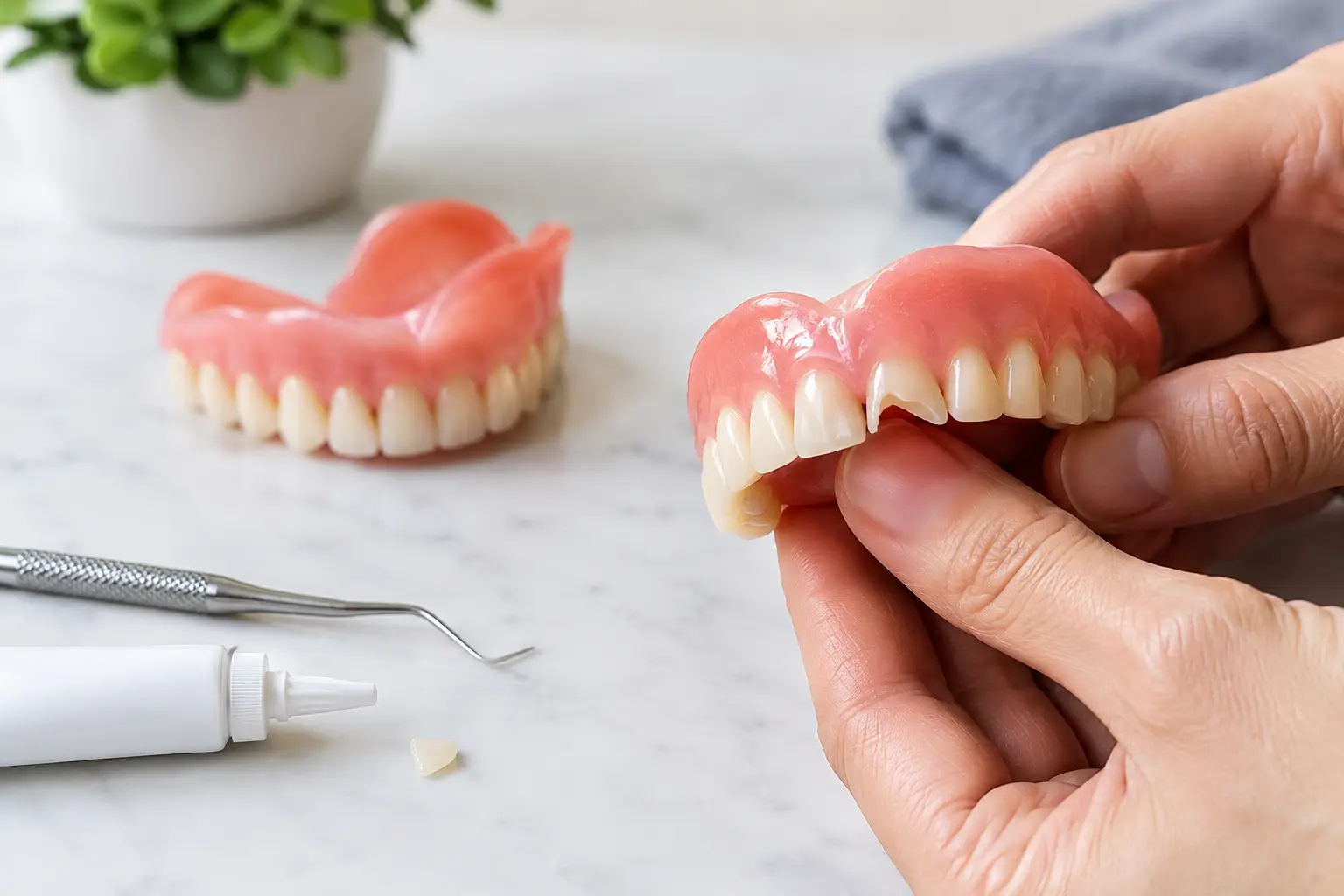
How to Fix Chipped Denture Teeth Without Making It Worse
A chipped denture tooth can turn a normal meal or conversation into a problem quickly. If you need to fix chipped denture teeth, the safest first step is to stop trying to smooth, glue, or force the denture back into regular use. A small chip can create a sharp edge, change how the teeth meet, or lead to a larger fracture if the appliance is stressed.
The right repair depends on where the chip is, how much material is missing, and whether the denture still fits correctly. A repair laboratory can assess the appliance and determine whether the tooth can be restored, replaced, or whether additional work is needed before it is worn again.
Check the Damage Before You Wear the Denture Again
Remove the denture and rinse it gently with cool or lukewarm water. Do not use hot water, which can distort denture material. Look for a rough edge, a crack extending into the base, a loose tooth, or pieces that have broken away.
A chip on the edge of one artificial tooth may appear minor, but the surface can still irritate the tongue, cheek, or lip. A chip on a front tooth may also affect speech and appearance. On back teeth, the concern is often function. Missing chewing surface material can make the denture unstable during meals and place extra force on other areas.
Do not assume a denture is safe to wear just because it still goes into place. A damaged tooth can alter your bite. Repeated pressure in the wrong spot may loosen another tooth, crack the acrylic base, or cause sore areas on the gums.
When to Stop Wearing It
Set the denture aside if it has a sharp edge, feels loose, rocks when you bite, causes pain, or has a visible crack near the chipped tooth. Also stop wearing it if the tooth itself moves when touched. Continuing to use a loose tooth can enlarge the damaged area and make the repair more involved.
If you have remaining natural teeth and the damaged appliance is a partial denture, be especially careful. A broken clasp, bent metal component, or changed fit can place pressure on natural teeth and gums. A dentist may need to evaluate oral tissues or supporting teeth in addition to the appliance repair.
Why Household Repairs Usually Create Bigger Problems
It is understandable to want a quick solution, particularly when a denture is needed for work, meals, or social plans. Household glue and repair kits are not a reliable substitute for a professional denture repair. Many adhesives do not bond properly to denture acrylic or denture teeth. They can break down with moisture, leave residue that interferes with a proper repair, or create a rough area that affects fit.
Never use super glue, craft glue, epoxy, hot glue, or a household adhesive on a denture. These materials are not intended for use in the mouth. They may contain substances that should not contact oral tissues, and they can make it difficult to align the tooth correctly.
Trying to file down a chipped tooth also has limits. Filing can remove more material than intended, create a flat or uneven chewing surface, and change the way upper and lower dentures meet. What feels smoother in your hand may still be uncomfortable or unstable when you bite.
A professional repair is not only about filling a missing corner. The repaired tooth needs to be secure, shaped appropriately, and checked in relation to the surrounding teeth and denture base. That is why a chip should be evaluated rather than covered with a temporary household fix.
How Professionals Fix Chipped Denture Teeth
The repair method depends on the appliance and the extent of the damage. When the denture tooth has only a small surface chip and remains firmly attached, a technician may be able to restore and contour the affected area. The goal is to remove roughness, rebuild the lost section when appropriate, and restore a comfortable surface.
When a substantial portion of the tooth is missing, or the tooth is cracked or loose, replacement may be the better option. The damaged tooth is removed and a replacement tooth is selected and positioned to match the denture as closely as possible. The technician then secures it within the denture base material and finishes the surface so it does not leave sharp edges.
Sometimes the visible chip is only part of the issue. A crack in the acrylic around the tooth, a weakened base, or multiple worn teeth may need attention at the same time. Repairing only the visible defect without addressing the supporting damage can result in another break soon afterward.
Color and shape matching also matter, especially for front teeth. Denture teeth vary in shade, size, contour, and translucency. A laboratory will work to select a suitable replacement, although an exact match can depend on the age and condition of the existing denture teeth.
A Repair May Not Solve a Fit Problem
If the denture has become loose, painful, or difficult to keep in place, the chip may be a sign of a broader fit issue. Gum and bone tissue naturally change over time, even with well-maintained dentures. A denture that no longer fits as intended can move during chewing, increasing stress on the teeth and base.
In these situations, tooth repair and fit correction are separate considerations. A denture can have a successfully repaired tooth but still need clinical attention for sore spots, bite changes, or oral health concerns. Be clear about every problem you have noticed, not just the chipped area.
What to Include in a Repair Request
Clear details help a repair provider understand the issue before arranging the next step. Denture Repair Laboratory uses a direct request process so customers can describe the damage and provide supporting files for review.
When submitting a request, include the following information:
Whether the denture is full or partial, and whether it is upper or lower.
Which tooth is chipped and whether it is a front or back tooth.
Whether the tooth is still attached, loose, missing a piece, or completely out.
Whether there are cracks, sharp edges, poor fit, pain, or problems chewing.
Clear photos of the denture from the front, back, and side, if available.
Photographs can help show the location and size of the chip, but they do not replace an in-person inspection of the appliance. Take pictures in good light on a clean towel or flat surface. Avoid placing the denture near a sink drain, where it could be dropped or damaged further.
If you still have a broken piece, keep it. Place it in a clean container or bag and bring it with the denture. Even if the piece cannot be reused, it may help identify the original tooth shape or material.
Protect the Denture Until It Can Be Evaluated
Handle the denture over a folded towel, a counter with a soft surface, or a basin partly filled with water. Dentures can break when dropped, and a chipped tooth can become a cracked base after one fall.
Keep the appliance clean, but do not scrub aggressively around the damaged area. Use a denture brush and a cleaner made for dentures, following the product directions. Avoid abrasive toothpaste and hot water. If you are not wearing the denture, store it safely as directed for that appliance so it does not dry out or warp.
If the damaged denture is causing cuts, swelling, bleeding, significant pain, or you cannot eat safely, contact a dental professional promptly. If you have trouble swallowing, breathing, or believe you may have swallowed or inhaled a broken piece, seek urgent medical care.
After the Tooth Is Repaired
Once the repair is complete, pay attention to how the denture feels during the first few uses. A repaired surface should not scratch the tongue or cheek, and the denture should not suddenly shift when you close your teeth together. Start with softer foods if the area feels unfamiliar, then return to normal foods as comfort allows.
Clean the denture daily and inspect it periodically for loosened teeth, hairline cracks, or worn chewing surfaces. Small problems are easier to address before they become a complete break.
A chipped denture tooth is disruptive, but it does not always mean the entire appliance needs to be replaced. Keep the denture safe, avoid household adhesives, and provide clear details about the damage so the appropriate repair can be arranged.
Comments