
Mail In Denture Repair Service for Broken Dentures
Updated: Oct 2
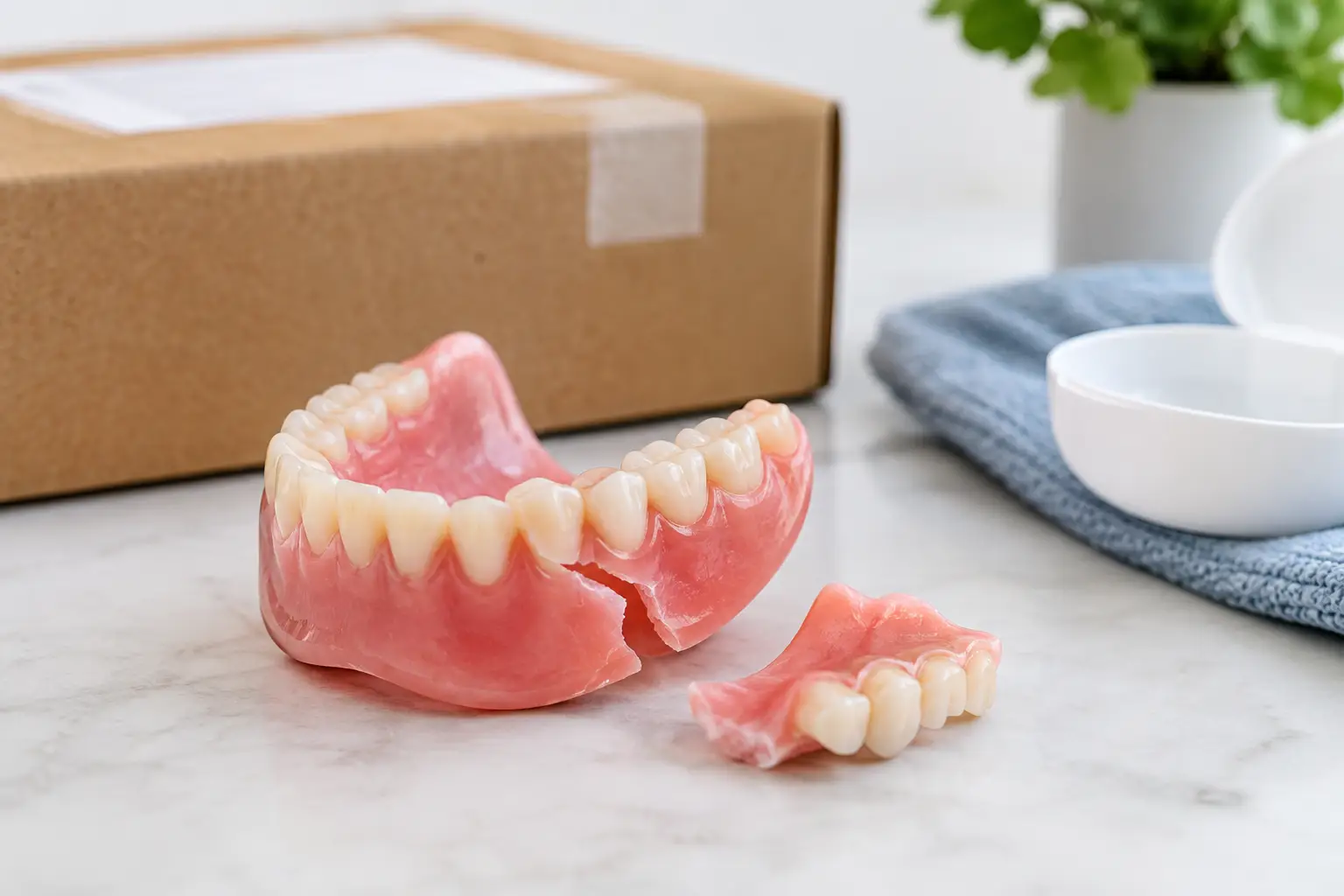
A broken denture can change the entire day. Meals become difficult, speech may feel less clear, and a denture that was dependable yesterday may no longer sit correctly. A mail in denture repair service gives denture wearers and caregivers a direct way to begin a professional repair request when an appliance is cracked, fractured, loose, missing a tooth, or otherwise damaged.
The first step is not simply putting the denture in a box. A clear repair request helps the laboratory understand what happened, identify the information needed for review, and coordinate the appropriate next step. If possible, keep all pieces of the denture together and avoid using household glue or temporary adhesives.
When a Mail In Denture Repair Service May Help
Mail-in coordination may be appropriate when a removable full or partial denture has a visible break, a crack across the base, a tooth that has come loose, or a component that no longer functions as it should. It can also be useful when a denture has become uncomfortable after damage and needs professional evaluation.
Some issues are obvious. A denture split into two pieces, for example, needs attention right away. Other problems are less clear. A hairline crack, a tooth that shifts when pressed, or a partial denture clasp that no longer holds may worsen with continued wear. Describing these changes accurately gives the repair provider a better starting point.
A repair request is not a substitute for dental care when there is a health concern. Contact a dentist promptly if there is significant pain, swelling, bleeding, a mouth sore that does not improve, a suspected infection, or damage to natural teeth. A dentist should also evaluate changes in the gums, jaw, or remaining teeth that may be affecting how the denture fits.
Start With a Clear Description of the Problem
A short, specific explanation is more useful than simply stating that the denture is broken. Include whether the appliance is a full denture or partial denture, which part is affected, when the damage occurred, and whether it can still be worn safely.
For example, “upper full denture cracked through the middle while eating” provides a clearer picture than “needs repair.” So does “lower partial has a loose front tooth and no longer stays in place.” The goal is to give the laboratory enough information to assess the request and advise on the next step.
If you are helping a parent, spouse, or other family member, confirm the basic details before submitting the request. It is helpful to know which denture is affected, whether all broken pieces have been saved, and whether the wearer has experienced any discomfort or changes in fit.
Photos Can Make the First Review Easier
Clear photos can support the initial review of a damaged denture. Take pictures in good lighting against a plain background. Photograph the denture from the front, back, and side, then add close-up images of the damaged area. If a tooth, clasp, or other piece came off, photograph that piece as well.
Photos do not replace an in-person dental examination when one is needed, and they may not show every issue. Still, they can help communicate the visible condition of the appliance before shipping is arranged. Include images with the contact request when file upload is available.
Avoid placing the denture in your mouth just to take a photo if it has sharp edges, broken wires, or unstable pieces. Do not force a damaged denture into place to check whether it fits. A crack can spread, and a partial denture with a damaged metal component can irritate the gums or mouth.
What to Provide With Your Repair Request
The repair process begins with accurate contact information and a usable description of the problem. Provide the wearer’s name, return address, phone number, and the best way to reach you. If a caregiver is coordinating the request, include the caregiver’s contact details and explain the relationship to the denture wearer.
Add any details that could affect handling of the case. This may include whether the denture is currently unusable, whether it has broken more than once in the same place, whether a tooth or clasp is missing, or whether the wearer has recently had dental treatment. Keep the description factual and direct.
Before sending anything, wait for service coordination instructions. This helps prevent missing information, incorrect packaging, or a denture arriving without a way to identify the owner or the requested work. A direct contact form with file upload can provide the laboratory with the information needed to review the case first.
Protect the Denture Before Mailing
Dentures can be damaged further during shipping if they are allowed to move inside the package. Once mailing instructions have been provided, use protective packing that keeps the appliance secure. The denture should not be loose against the sides of a box or exposed to pressure from other items.
Do not wrap a denture in a paper towel and leave it on a counter while preparing the shipment. Small teeth, clasps, or broken pieces can be accidentally thrown away. Place every recovered piece in a secure container or bag, and keep them together until the repair request is completed.
Do not attempt to repair the denture with super glue, craft glue, epoxy, tape, or a home repair kit before sending it. These materials can interfere with professional repair work, create uneven surfaces, and make the appliance unsafe or uncomfortable to wear. They can also obscure the original fracture area, which may make evaluation more difficult.
If the denture has been stored dry, follow the instructions provided for preparing it for shipment. The right handling approach can depend on the type of appliance and the nature of the damage. When in doubt, ask before mailing rather than making assumptions.
Repair Is Not Always the Same as Adjusting Fit
A denture can be structurally intact but still fail to fit comfortably. It may rock, rub the gums, slip while speaking, or feel loose during meals. Those concerns may involve changes in the mouth, changes in the denture base, or a need for dental evaluation rather than a simple break repair.
This distinction matters because a repaired denture is not automatically a denture that fits correctly. If the appliance was loose or painful before it broke, mention that in the request. The laboratory can then consider the full situation during review rather than focusing only on the visible damage.
Partial dentures require particular care. Their plastic base, replacement teeth, clasps, and metal framework all work together. A problem in one area can affect how the partial rests against natural teeth and gums. Never bend a clasp back into position at home. It may weaken, break, or place pressure where it does not belong.
Questions That Help Prevent Delays
Before submitting a request, take a moment to confirm that the essential details are ready. You should be able to identify the denture, explain the problem, provide current contact information, and include clear photos if available. If there are loose or separated pieces, make sure they have been saved.
It also helps to state any timing concerns without leaving out the condition of the appliance. A denture that is broken in several places, has sharp edges, or cannot be worn should be described that way. Clear information allows the repair provider to respond to the actual situation rather than guess from a brief message.
Denture Repair Laboratory uses a direct request process so customers can submit contact details, explain the repair need, and upload supporting files for review. This is especially useful when the person wearing the denture is not the person completing the request.
A damaged denture should not have to remain an unresolved disruption. Save the pieces, describe the problem clearly, provide useful photos when possible, and begin the request with complete information so the next step can be arranged with fewer questions.
Where we help: patients walk in or mail their dentures to us from Boston, Everett, Lowell, Framingham, Worcester, Plymouth, the North Shore, Middlesex & MetroWest, South of Boston, Cape Cod, southern New Hampshire and Providence, RI.
Comments