
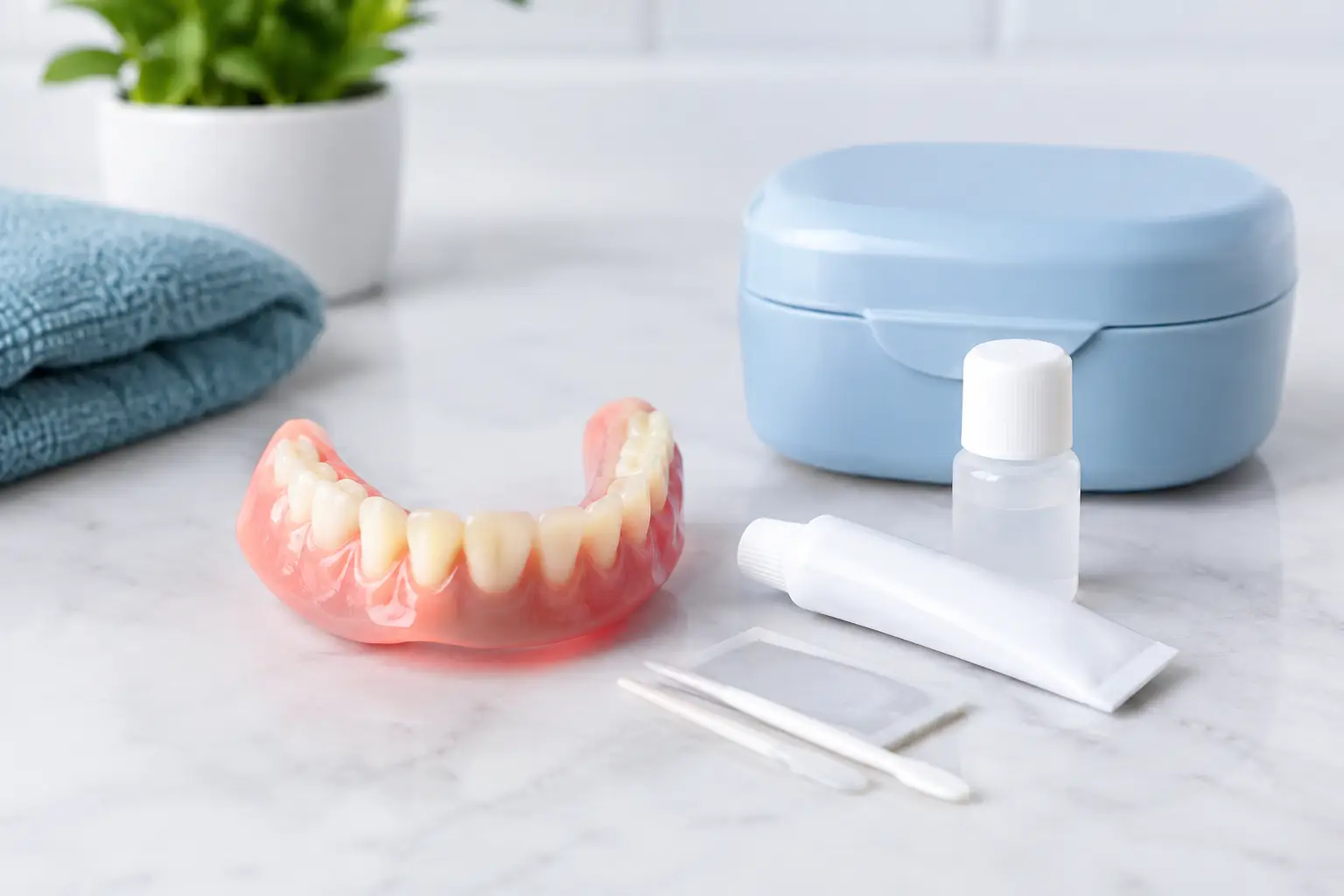
Temporary Denture Repair Kit Safety Basics
A broken denture can turn a normal meal, conversation, or workday into an immediate problem. Temporary denture repair kit safety comes down to one rule: a home repair is only a short-term measure, not a replacement for a proper repair. The wrong product, too much material, or continued wear after a poor repair can damage the denture further and create sore spots in the mouth.
Temporary kits can be useful when used exactly as directed and only for a limited period. They are not appropriate for every crack, break, loose tooth, or partial denture problem. Before attempting any repair, assess the damage and decide whether wearing the denture is safe at all.
What a Temporary Denture Repair Kit Can and Cannot Do
Most temporary repair kits use a dental-safe adhesive or repair resin intended to hold separated denture pieces together until professional help is available. They may help stabilize a clean, simple break in an acrylic denture when all pieces are present and fit together closely.
That does not mean the denture has returned to normal strength. A repaired area can reopen under chewing pressure, especially with hard, sticky, or crunchy foods. Even if the repair feels firm in your hand, it may shift when the denture is in the mouth. A small change in the fit can rub the gums, alter the bite, or place stress on another area of the appliance.
A temporary kit should not be used to replace a missing denture tooth, rebuild a large missing section, repair metal clasps, reshape a denture that no longer fits, or correct a denture that has become loose over time. These issues require a proper assessment because the visible damage may not be the only problem.
Temporary Denture Repair Kit Safety: Materials Matter
Use only a product specifically labeled for temporary denture repair. Household glues, craft adhesives, epoxy, super glue, and hardware-store repair materials do not belong in the mouth. They can contain substances not designed for oral use, create sharp or rough surfaces, and make a professional repair more difficult.
Super glue is a frequent concern because it bonds quickly. It can also flow into areas that affect the fit of the denture, harden unevenly, and leave a rough edge against the gums or tongue. It may permanently alter the broken surfaces, preventing the pieces from meeting correctly during a later repair.
Do not use hot glue, chewing gum, wax, tape, or other improvised materials. These products are not stable for chewing, can come loose, and may create a choking or swallowing risk. A denture should not be worn if a temporary material is loose, crumbling, sharp, or separating from the appliance.
Follow the kit instructions precisely. That includes cleaning and drying the denture as directed, using only the stated amount of material, allowing the full cure time, and avoiding food or drink during the required setting period. More adhesive does not create a stronger repair. Excess material can change how the denture seats on the gums.
Check the Denture Before Wearing It
After a temporary repair has cured, inspect the denture under good light. The repaired surfaces should be joined without gaps, loose material, sharp points, or rough edges. Run a clean finger carefully along the repair area. If it feels jagged or bulky, do not attempt to file, grind, or reshape it with household tools.
Before putting it back in the mouth, make sure no small piece is missing. If a tooth, acrylic fragment, clasp, or repair material cannot be located, do not wear the denture until it has been evaluated. A missing part may be swallowed or inhaled if it becomes dislodged.
When you first place the denture, it should sit in its usual position without forcing it. Do not bite down hard to make it fit. Remove it immediately if it rocks, pinches, causes a new pressure point, changes your bite, or feels unstable. Continuing to wear an ill-fitting denture can injure gum tissue and may turn a repairable issue into a larger one.
If you do wear a temporarily repaired denture, choose soft foods and chew gently. Avoid hard candy, nuts, crusty bread, ice, sticky foods, and tough meats. Remove the denture at night unless a dental professional has instructed you otherwise, then clean it carefully and inspect the repaired area again.
When Not to Use a Temporary Repair Kit
Some damage calls for professional handling rather than a temporary fix. Do not use a kit if the denture is broken into multiple pieces, the base is warped, a metal component is bent or broken, or the denture no longer fits as it did before. A partial denture with a damaged clasp can place harmful pressure on the supporting teeth if worn without correction.
A loose denture is also different from a broken denture. Dentures can become loose because gum and bone contours change over time. Adding repair material to the inside surface without proper evaluation can worsen the fit and cause sores. Adhesive may help with short-term retention for some wearers, but it does not correct a denture that needs adjustment, relining, or replacement work.
Do not attempt a home repair if the denture has caused an open sore, bleeding, significant swelling, or persistent pain. The appliance should stay out of the mouth until the cause is addressed.
Seek urgent medical or dental help if any of the following occurs:
You may have swallowed or inhaled a denture piece, tooth, clasp, or repair material.
You have trouble breathing, swallowing, or controlling bleeding.
A sharp broken edge has cut the mouth or is embedded in gum tissue.
You develop facial swelling, fever, or severe pain.
A partial denture becomes stuck, or a clasp damages a supporting tooth.
Avoid Common Home Repair Mistakes
The most common mistake is treating a temporary repair as permanent. A denture can appear intact while remaining weak at the break line. Repeated chewing pressure may cause the same area to fracture again or create a new break nearby.
Another problem is trying to repair the denture while it is still dirty or wet. Food residue, denture adhesive, and moisture can interfere with the bond. Clean the appliance according to the product instructions, but do not soak it in very hot water. Heat can distort acrylic dentures and change their fit.
Do not test a repair by biting aggressively or trying to flex the denture. If it needs force to prove it is secure, it is not ready to wear. Keep every broken piece, even a small fragment. A laboratory may be able to use those pieces to restore the denture more accurately.
It is also helpful to take clear photos of the break and any separate pieces before applying a temporary product. If you are requesting repair service, photos can help explain whether the appliance is a full denture or partial denture, where the break occurred, and whether teeth or metal parts are involved. Include a short description of when the damage happened and whether the denture still fits.
What Professional Repair Adds
A proper denture repair is more than joining two pieces together. The broken surfaces need to align correctly so the denture retains its intended shape, fit, and bite. Depending on the damage, the repair may need reinforcement, replacement acrylic, tooth work, or attention to a metal component.
Professional evaluation also helps identify why the denture broke. A fracture may result from a drop, but it can also be related to a thin or worn area, an uneven bite, repeated flexing, or a change in the way the denture fits. Repairing only the visible crack without addressing the underlying issue can lead to another failure.
Denture Repair Laboratory uses a direct request process for customers who need repair coordination. Provide the essential details about the appliance and damage, and include supporting photos when available. Clear information at the start helps determine the appropriate next step and avoids unnecessary delay.
Until the denture can be assessed, keep it in a clean container, out of reach of children and pets, and away from heat. If a temporary repair causes pain, movement, or sharpness, remove the denture rather than trying to make it work for one more meal.
Comments